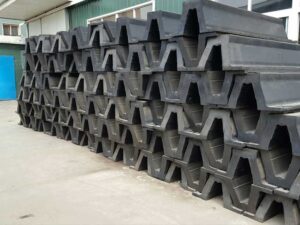
تعتمد الطريقة الصحيحة لتركيب واقي الطين المطاطي من النوع D على خط التلامس، والسطح، وطريقة التثبيت. قد يؤدي عدم المحاذاة الصحيحة أو ضعف الإحكام إلى ارتخاء القطع، أو التسرب، أو التمزق المبكر. في شركة هينجر لمستلزمات الشحن، نبيع مصدات مطاطية وقد لاحظنا هذه المشكلات ميدانياً. يوضح هذا الدليل الخطوات التي يمكنك اتخاذها في الموقع لضمان نجاح عملية التركيب.
أساسيات مصدات النوع D ومناطق التلامس
الجزء الخلفي المسطح من واقي الطين من النوع D يجب أن يكون السطح مستويًا تمامًا مع سطح التثبيت. ثم يلامس السطح المنحني الهيكل. يوفر هذا الشكل "D" تصميمًا مضغوطًا وتثبيتًا متينًا، مما يجعله شائع الاستخدام في قوارب العمل، وجدران الأرصفة، والأرصفة البحرية. مع ذلك، إذا كان موضع التلامس مع الهيكل مرتفعًا جدًا أو منخفضًا جدًا، فسيتأثر أداء المصد سلبًا. أولًا، يجب تحديد موضع التلامس بدقة.
فهم ملف تعريف D
يجب أن يكون الجزء الخلفي المسطح مستويًا مع الجدار أو الهيكل لتوزيع الحمل على كامل مساحته. عند اصطدام جسم به، ينهار السطح المنحني ويوزع الصدمة على مساحة قابلة للاستخدام. تسبب النقاط المرتفعة أو الفجوات ضغطًا غير متساوٍ على الأجزاء المعدنية. يُعد كل من حجم الرفرف وملاءمته التامة أمرًا بالغ الأهمية.
أسطح التركيب الشائعة
تتطلب جدران الأرصفة الخرسانية عادةً مثبتات أو صفائح مدفونة. أما بالنسبة للهياكل الفولاذية، فقد يكون التثبيت بالمسامير أو الأقواس الملحومة خيارًا مناسبًا، لكن مكافحة التآكل تبقى أولوية قصوى. يتطلب تركيب الهيكل تحكمًا دقيقًا في الثقوب وإحكام إغلاقها لمنع التسربات وحماية الطلاء. ضع سهولة الوصول دائمًا في الاعتبار، فأنت بحاجة إلى مساحة كافية للحفر والربط وفحص المعدات.
يتعلم أكثر: ما هي استخدامات واقيات الطين المطاطية على شكل حرف D؟

التخطيط وتقييم الموقع
يعتمد التركيب الموثوق على فهم الظروف الفعلية للموقع وتصميمه ومدى ملاءمته. ابدأ بتحديد نطاق التشغيل. ضع في اعتبارك أنواع السفن وزوايا اقترابها ومستويات المياه. استخدم هذه المعلومات لتحديد خط رسو واضح. ثم، افحص سطح التركيب وخطط لعمليات الحفر والإغلاق والوصول.
تحديد "خط الإرساء" و"ارتفاع التلامس"“
تجاهل العلامات التجميلية وركز على منطقة التلامس الفعلية للسفينة. استخدم ميزانًا أو خط ليزر كنقطة مرجعية ثابتة. إذا كنت تُقدم خدماتك لسفن بأحجام مختلفة، فحدد أعلى وأدنى نقاط التلامس. يجب أن يغطي تصميم المصد هذا النطاق بالكامل. إذا كنت غير متأكد، فتحدث إلى فريق العمليات أو ابحث عن آثار احتكاك قديمة على الهيكل.
تحضير الركيزة
يجب أن يكون سطح التثبيت مستويًا لضمان تثبيت الرفرف بإحكام دون انزلاق. أزل أي طلاء متقشر أو رواسب بحرية أو شوائب، لأنها قد تُضعف مانع التسرب. قبل الحفر في الخرسانة، حدد موقع أي حديد تسليح أو صفائح مدفونة. إذا كنت تخطط لاستخدام مسامير تثبيت، فتأكد من إمكانية الوصول إلى الجزء الخلفي. في حال عدم وجودها، ستحتاج إلى استخدام مثبتات أو دعامات.
تغطية الرفارف والمسافة بينها
يُحدد شكل الوعاء المسافة المثالية بين الرفارف. تحقق من ذلك بمقارنته بتصميم مشروعك. يعتمد الكثيرون على قاعدة عامة بناءً على عرض الرفارف، ولكن من الأفضل التحقق من المسافات مقارنةً بأصغر وعاء مُتوقع. كما أن معالجة الأطراف مهمة، حيث تبدأ التمزقات غالبًا من الأطراف الحادة. خطط لأطراف مستديرة أو أغطية طرفية. إذا كنت تتوقع تمددًا حراريًا أو انثناءً، فاترك مسافة مُحددة بين الرفارف بدلًا من إنشاء وصلات مُحكمة.
جدول التحقق قبل التثبيت (للاستخدام في الموقع)
تحقق من العناصر | ما الذي يجب تأكيده | لماذا يهم ذلك | الأدلة التي يجب تسجيلها |
|---|---|---|---|
نطاق ارتفاع التلامس | نطاق تلامس الهيكل الأعلى/الأدنى | يمنع أخطاء التركيب | صور الخطوط المحددة، ملاحظات |
حالة سطح التثبيت | التسطيح، والتآكل، والأوساخ | يضمن التحميل + منع التسرب | صور قبل/بعد التنظيف |
تحديد الجدوى | الوصول عبر البراغي مقابل الوصول عبر المرساة | يتجنب إعادة التصميم أثناء التثبيت | رسم تخطيطي، مخطط أساسي |
موضع الثقب | مواقع حديد التسليح/الصفائح | يمنع حدوث أضرار هيكلية | نتائج المسح أو الملاحظات |
حزمة الأجهزة | المواد، والغسالات، والأقفال | يقلل من التفكك/الصدأ | قائمة المواد، معرفات المواد |
خطة الإغلاق | نوع المادة المانعة للتسرب + الموقع | يتحكم في تسرب المياه | قائمة التحقق من الإغلاق |

طرق الإصلاح: حزم الأجهزة ومتى يتم استخدامها
اختر طريقة التثبيت بناءً على نوع السطح، وقدرته على تحمل الأحمال، واحتمالية حركته. تستخدم معظم التركيبات مسامير تثبيت، أو مثبتات، أو أنظمة قضبان. قد يؤدي استخدام الطريقة الخاطئة إلى فشل التركيب. الهدف هو الحصول على نظام محكم الإغلاق وقابل للاستخدام.
التثبيت بالمسامير
يمكنك استخدام التثبيت بالمسامير النافذة إذا كان بإمكانك الوصول إلى الجزء الخلفي من الركيزة، وكانت قادرة على تحمل الحمل المطلوب. تتيح لك هذه الطريقة التحكم المباشر في قوة التثبيت وتجعل عملية الاستبدال سهلة. على الفولاذ، تأكد من أن الصفيحة الخلفية سميكة بما يكفي، واحرص على حماية الحواف من الصدأ. على الخرسانة، تأكد من أن الفتحة تسمح بمرور المسمار بالكامل.
مثبتات أو صفائح مدمجة
استخدم مثبتات أو ألواحًا مثبتة في الجدران عندما يتعذر الوصول إلى الجهة الخلفية. هذا شائع في عمليات ترميم جدران الأرصفة. اتبع تعليمات الشركة المصنعة فيما يتعلق بنوع المثبت وعمق التثبيت. جودة الثقوب بالغة الأهمية، خاصةً في الأنظمة المُلصقة. قد يحتاج الخرسانة المتدهورة إلى إصلاح قبل التركيب.
نظام السكة المنزلقة أو نظام التعليق
في المناطق ذات المد والجزر المتغير أو العوامات العائمة، قد لا يحافظ المصد ذو البراغي الثابتة على خط التلامس الصحيح. تتيح أنظمة السكك الحديدية إمكانية التعديل الرأسي وتسهيل الصيانة. تسمح الأنظمة المعلقة للمصد بالحركة مع الحفاظ على محاذاته. تضيف هذه الأنظمة مكونات معدنية إضافية، لذا فإن الوقاية من التآكل والفحص أمران بالغا الأهمية. تأكد من أن مسار الحركة لا يضغط على المطاط.
شرائط التثبيت
تتضمن العديد من القطاعات شريط تثبيت داخليًا يوزع الحمل ويمنع الانضغاط. تشمل المواد الشائعة الفولاذ المقاوم للصدأ والألومنيوم والبوليمر الصلب. يجب أن يتناسب الشريط مع القطاع بشكل صحيح وأن يتماشى مع الثقوب المحفورة. بدون شريط مناسب، قد تنزلق أدوات التثبيت مباشرة داخل المطاط.

خطوات التركيب: التحديد، الحفر، التثبيت، الإغلاق
اتباع إجراءات عمل دقيقة في التحديد والحفر والتثبيت والربط والإغلاق يقلل من الحاجة إلى إعادة العمل. تجنب الحفر قبل التأكد من التصميم. لا تُحكم ربط المسامير تمامًا إلا بعد تثبيت الرفرف في مكانه الصحيح. اعمل على مراحل وتحقق من كل مرحلة وفقًا للمتطلبات. استخدم أساليب الرفع الآمنة وتجنب استخدام الأدوات الحادة على الحواف المطاطية.
تحديد المواقع والتثبيت المؤقت
ابدأ من نقطة مرجعية قابلة للقياس، وثبّت الرفرف في مكانه. تأكد من محاذاته لخط الرسو المحدد. إذا كنت تستخدم شريط تثبيت، فأدخله الآن وتأكد من استوائه. استخدم بعض المثبتات المؤقتة لتثبيت كل شيء في مكانه.
الحفر وإعداد الحفرة
قم بحفر ثقوب تتناسب مع نظام التثبيت الذي اخترته. تأكد من أن الثقوب عمودية على سطح التثبيت. ارتدِ معدات الوقاية الشخصية المناسبة وتخلص من المخلفات. بالنسبة للمثبتات، تحقق من حجم الثقب وعمقه. نظف الثقوب جيدًا بعد الحفر، لأن الغبار والرطوبة يضعفان قوة التثبيت.
التنظيف والتجهيز
تأكد من نظافة الثقوب وسطح التثبيت لضمان إحكام الإغلاق. استخدم فرشاة وهواءً مضغوطًا لإزالة الشوائب. حافظ على جفاف المنطقة إذا لزم الأمر. قبل استخدام المذيبات، تأكد من توافقها مع الطلاءات الموجودة. يُعدّ سطح التلامس النظيف ضروريًا للتثبيت الميكانيكي ولضمان إحكام الإغلاق بشكل دائم.
تضييق تدريجي
أحكم ربط المسامير بشكل متقاطع لتثبيت الرفرف بالتساوي. هذا يوزع قوة التثبيت على شريط التثبيت. اتبع مواصفات عزم الدوران المحددة للمشروع، ولا تعتمد على التخمين. قد يؤدي الإفراط في الربط إلى تشوه المطاط، بينما يؤدي عدم إحكام الربط إلى تركه مرتخيًا. أحكم الربط على مراحل، مع التحقق من المحاذاة بعد كل دورة. إذا التوى الرفرف أو انحنى، فتوقف وقم بتصحيحه.
الختم والتشطيب النهائي للحواف
ضع مادة مانعة للتسرب مقاومة للعوامل الجوية ومناسبة للاستخدام البحري حول الحواف والفتحات التي قد يتسرب منها الماء. استخدمها بانتظام. عند استخدام أغطية الأطراف، ركّبها بعناية دون إحداث فواصل حادة. فالحواف المصقولة جيدًا تُسهّل الصيانة المستقبلية.

التحقق واستكشاف الأخطاء وإصلاحها
لا يكتمل التركيب إلا بعد التأكد من محاذاته وثباته وإحكام إغلاقه. حدد مواعيد لإعادة الفحص بناءً على ظروف التشغيل. تكشف الفحوصات الأولية عن أخطاء التركيب، بينما يُعيد شدّ البراغي تثبيت الأجزاء التي استقرت. أما الفحوصات الدورية فتبحث عن أي ارتخاء أو عدم محاذاة أو تمزق. دوّن ملاحظاتك لتتبع التغييرات.
قائمة التحقق من القبول
- تأكد من أن خط الرفرف يطابق خط الإرساء.
- تأكد من الحفاظ على مسافة مناسبة بين الوحدات المتجاورة.
- تأكد من استخدام جميع أدوات التثبيت للغسالات وآليات القفل الصحيحة.
- تأكد من تغطية المادة المانعة للتسرب بالكامل.
- افحص الأسطح المطاطية بحثًا عن أي قطع أو تلف ناتج عن التعامل معها.
توقيت إعادة عزم الدوران
يعتمد توقيت إعادة ضبط عزم الربط على نوع المعدات والأحمال. اتبع خطة الصيانة الخاصة بك. من الشائع إعادة الفحص بعد فترة الاستقرار الأولية وحالات الرسو المبكرة. تحقق من قيم عزم الربط والحالة الظاهرية. تُعد هذه الملاحظات بمثابة أساس لعمليات الفحص المستقبلية.
فحص العلاقة بين الأعراض والسبب
تتبّع المشاكل إلى أسبابها الجذرية. ابدأ بفحص المحاذاة، والمثبتات، والمادة المانعة للتسرب. تأكد من أن طريقة التثبيت مناسبة للسطح. انتبه جيدًا للأطراف، حيث تبدأ التمزقات غالبًا.
جدول استكشاف الأخطاء وإصلاحها (للاستخدام الميداني السريع)
الأعراض | الأسباب الأكثر ترجيحاً | الفحوصات الأولية | الإجراءات التصحيحية النموذجية |
|---|---|---|---|
عدم الاتصال بالهيكل | تم تجاهل التخطيط لشريط الاتصال | تحقق من علامات الاحتكاك مقابل الخط | إعادة وضع الأجزاء |
أجزاء مفكوكة | عزم دوران منخفض، اهتزاز | تحقق من عزم الربط، وصواميل القفل | أعد ربط الأقفال، وقم بترقية الأقفال. |
تشوه المطاط | إحكام الربط المفرط، شريط تالف | افحص شكل المظهر الجانبي | أعد تثبيت الشريط، ثم أعد ربطه بإحكام. |
تسرب المياه | سوء العزل، والأوساخ | افحص استمرارية مادة منع التسرب | نظف وأعد إحكام الإغلاق |
تمزق الحواف | حواف حادة، بدون أغطية طرفية | افحص الانتقالات | قم بتركيب الأغطية وتقريب الحواف |
التآكل المبكر | مادة خاطئة، تلف في الطلاء | افحص مواد الأجهزة | استبدل، حسّن الإحكام |
الخاتمة
يتطلب تركيب واقيات الطين المطاطية من النوع D بشكل موثوق محاذاةً دقيقةً وإجراءات تثبيت صحيحة. انتبه جيدًا لعملية الشد والإحكام. اعتبر التخطيط والتحضير والشد التدريجي عناصر تحكم أساسية. ضع جدولًا زمنيًا لفحوصات القبول وإعادة الشد، ووثّق النتائج. يضمن هذا النهج استباق المشاكل ومنع تكرارها.
الأسئلة الشائعة
حدد المسافة بين المصدات بناءً على أصغر سفينة تحتاج إلى استيعابها. تحقق من ذلك بمقارنته بمنطقة التلامس. تُعدّ المسافة التقريبية المستندة إلى عرض المصدات نقطة انطلاق، وليست حلاً نهائياً. تأكد من عدم اصطدام أي جزء من هيكل السفينة بالبنية الموجودة بين المصدات.
يعتمد الحجم على امتصاص الطاقة المطلوب ومساحة التركيب المتاحة. تحقق من نطاق ارتفاع التلامس ومسافة التباعد. اختر شكلاً مناسباً دون أن يرتكز على زواياه. استخدم حسابات الطاقة إن أمكن، وإلا فاستشر مهندساً للحصول على التوجيه.
لا يُجدي التثبيت اللاصق إلا مع الأنظمة المصممة خصيصًا له. وتعتمد معظم المنشآت البحرية على التثبيت الميكانيكي لضمان تثبيت محكم. عند استخدام المراسي اللاصقة، يُعدّ تحضير السطح أمرًا بالغ الأهمية. إذا لم تتمكن من التحكم في ظروف الموقع، فاستخدم أدوات التثبيت الميكانيكية.
اختر المادة المناسبة لمستوى تعرضها للتآكل. من الخيارات الشائعة الفولاذ المقاوم للصدأ أو الفولاذ الكربوني المحمي. يعتمد الخيار الأمثل على ملوحة الماء وموقع منطقة الرذاذ. استخدم حلقات مانعة للتسرب وطرق عزل مناسبة، والتزم دائمًا بمواصفات المشروع.
حدد وتيرة الفحص بناءً على كثافة حركة المرور وشدة التأثير. قم بإجراء فحص أولي، وإعادة ضبط عزم الدوران بعد الرسو المبكر، وعمليات تفتيش بصرية منتظمة. تحتاج الأنظمة ذات حركة المرور الكثيفة أو تلك الموجودة على هياكل عائمة إلى فحوصات أكثر تكرارًا. احتفظ بسجلات لرصد أي اتجاهات مبكرًا.
تشمل الأخطاء الشائعة الحفر قبل التحقق من التصميم، وعدم ضبط ارتفاع التلامس بدقة. كما أن عدم إحكام الربط بشكل متساوٍ، وسوء التنظيف، وعدم معالجة الأطراف بشكل صحيح، كلها عوامل تُسبب مشاكل. استخدم قائمة مراجعة للمساعدة في تجنب هذه الأخطاء.