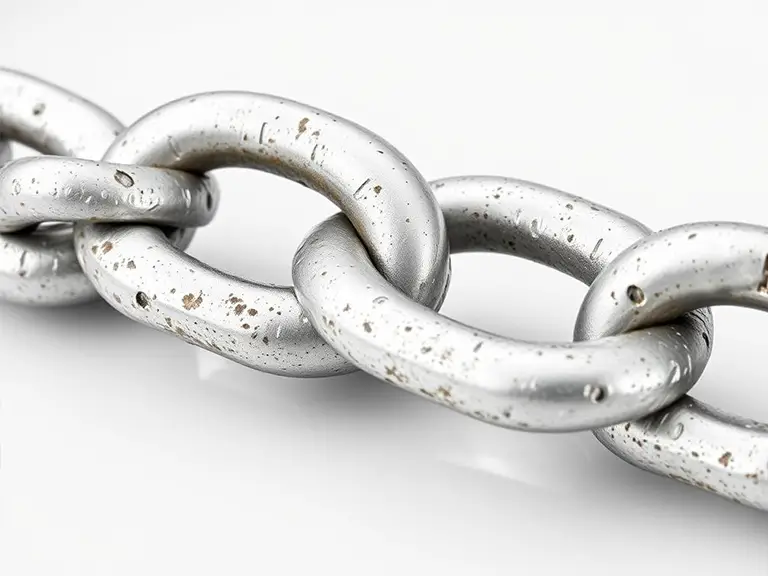
Pour déterminer la taille de la chaîne d'ancre, utilisez un pied à coulisse pour mesurer le diamètre du fil (l'épaisseur du maillon métallique) de la taille principale. Mesurez également le pas (la longueur intérieure) et la largeur totale pour vous assurer de sa compatibilité avec le guindeau. Veillez à effectuer les mesures à quelques maillons des soudures et des zones de surépaisseur. L'idéal est de mesurer le diamètre du fil et le pas pour qu'ils correspondent à ceux du guindeau. Ceci est essentiel au bon fonctionnement de la chaîne.
Outils et préparation pour une mesure précise
Utilisez un pied à coulisse (à vernier ou numérique) pour des résultats plus précis. Une règle ou un mètre ruban peuvent convenir, mais ils sont moins précis, surtout sur une chaîne usée ou revêtue.
Avant de prendre les mesures, nettoyez les maillons pour enlever les dépôts de sel et les traces de peinture épaisse. Ensuite, sélectionnez 5 maillons au hasard pour effectuer les mesures. Évitez les maillons visiblement usés, étirés ou déformés.
Étape par étape : Comment mesurer les dimensions d’un maillon de chaîne
Mesurez cinq maillons non adjacents, en évitant la zone de soudure, et calculez la moyenne des résultats. Cela réduit les erreurs dues à des maillons défectueux et donne une représentation plus précise de votre chaîne.
- Mesurer le diamètre du fil (taille de la chaîne) : Mesurez le côté de la pièce où l'acier est rond et régulier, à l'opposé de la soudure. Prenez plusieurs mesures et calculez la moyenne.
- Mesurer la longueur intérieure des maillons (pas)Mesurez la longueur intérieure du maillon d'un bord intérieur à l'autre. Cette dimension est essentielle pour la compatibilité avec les turbans.
- Mesurer la largeur intérieure du lien : Mesurez la largeur intérieure d'un bord intérieur à l'autre. Bien que moins sensible que le pas, elle influe tout de même sur le bon enclenchement du barbotin.
Liste de contrôle rapide:
- Nettoyer le lien (enlever la croûte et la peinture).
- Sélectionnez 5 liens aléatoires.
- Mesurez le diamètre du fil à distance de la soudure.
- Mesurez la longueur et la largeur intérieures.
- Moyenne de chaque dimension.
- Unités d'enregistrement (mm ou pouces).
Modèle de fiche de mesure recommandé :
| Objet | Que faut-il enregistrer ? | Exemple |
|---|---|---|
| Diamètre du fil | Moyenne de 5 mesures | 8,0 mm |
| Longueur intérieure | Moyenne de 5 mesures | 24,0 mm |
| largeur intérieure | Moyenne de 5 mesures | 10,0 mm |
| Notes | Usure/revêtement/élasticité | “ Légère usure, nettoyé ” |

Normes courantes des chaînes d'ancrage et leurs domaines d'application
Le respect des normes est important car deux chaînes peuvent avoir le même diamètre mais un pas et une largeur différents. C'est souvent la cause première des problèmes de guindeau.
DIN 766 – Chaîne à maillons courts métrique
La norme DIN 766 est un format courant de maillons courts métriques, défini par le diamètre du fil et la géométrie du maillon. Elle est largement utilisée lorsqu'un ajustement calibré est requis.
Si vous cherchez à assortir un gitan, vérifiez la longueur et la largeur intérieures, et pas seulement le diamètre.
ISO 4565 – Chaîne calibrée métrique
La norme ISO 4565 est une norme métrique conçue pour la compatibilité des guindeaux. Elle assure des dimensions de maillons constantes pour un fonctionnement fluide du barbotin.
Si le manuel de votre guindeau spécifie la norme ISO, utilisez la norme ISO et non la norme DIN “ suffisamment proche ”, sauf si le fabricant confirme la compatibilité.
BBB – Chaîne à maillons courts en Amérique du Nord
La chaîne BBB est une chaîne à maillons courts souvent utilisée avec les guindeaux. Ses maillons sont plus compacts que ceux des chaînes classiques.
Ne présumez pas que BBB corresponde à une taille métrique spécifique. Mesurez et vérifiez par rapport aux spécifications de votre Gypsy.
G4 (Haute Résistance) – Chaîne plus résistante pour l'ancrage aux États-Unis
La chaîne G4, ou Hi-Test, est une chaîne haute résistance couramment utilisée dans les systèmes d'ancrage américains. Cependant, sa résistance ne compense pas un pas inadapté. Même une chaîne robuste peut bloquer un barbotin.
Dimensions de référence DIN 766 (exemple de guide ; toujours vérifier auprès de votre fournisseur ou dans le manuel du guindeau) :
| Taille de la chaîne (mm) | Diamètre du fil (mm) | Longueur intérieure (mm) | Largeur intérieure (mm) |
|---|---|---|---|
| 6 | 6 | 18.5 | 8 |
| 7 | 7 | 22 | 9 |
| 8 | 8 | 24 | 10 |
| 10 | 10 | 28 | 14 |
| 11 | 11 | 31 | 14 |
| 13 | 13 | 36 | 18 |
Adaptation chaîne-guindeau (gitane) : Le contrôle pratique
Pour adapter un barbotin de guindeau, il faut que le diamètre, la longueur intérieure (pas) et la largeur intérieure de la chaîne correspondent aux spécifications du barbotin. Se fier uniquement au diamètre est risqué.
Commencez par consulter le manuel de votre guindeau ou les marquages du barbotin. Recherchez la norme spécifiée (DIN, ISO, BBB ou G4) et le diamètre de la chaîne. Si le manuel est indisponible, mesurez votre chaîne et comparez-la au tableau des chaînes du fabricant.
Une fois la chaîne choisie, testez-la. Passez-en un court brin dans le guide-chaîne sous une charge légère et vérifiez qu'elle ne monte pas, ne saute pas et ne se bloque pas.

Notes de sélection rapide après la mesure
Une fois que vous avez mesuré et identifié les dimensions et la norme de la chaîne, choisissez une chaîne compatible avec le calibrage de votre guindeau. Cela vous évitera une usure prématurée et coûteuse.
Pour une meilleure résistance, choisissez une chaîne conçue pour l'ancrage. Vérifiez la charge de travail maximale (CTM) et la résistance à la rupture indiquées par le fabricant pour votre taille. Évitez de mélanger des chaînes de géométries différentes sur une même ligne si vous utilisez un guindeau.
Choisissez une lunette adaptée à vos besoins. Par temps calme, un rapport de 5:1 convient. Pour une utilisation courante, visez un rapport de 7:1. Par gros temps, prévoyez un rapport de 10:1 si vous avez suffisamment d'espace pour l'utiliser.
Erreurs de mesure courantes et dépannage
La plupart des problèmes de “ mauvaise taille ” proviennent d'erreurs de mesure, et non d'erreurs de calcul. Corrigez le processus, et la taille de chaîne appropriée deviendra évidente.
| Le problème, vous voyez | Cause probable | Ce qu'il faut faire |
|---|---|---|
| Le diamètre semble incohérent. | Mesuré près de la soudure ou sur une surface plane usée | Mesurez à distance de la soudure ; utilisez la moyenne sur 5 maillons. |
| La chaîne “ convient presque ” à la gitane mais saute | Inadéquation du terrain | Vérifier la longueur intérieure par rapport aux spécifications du Gypsy. |
| Les mesures sont trop grandes. | Croûte ou dépôt de sel | Nettoyer jusqu'à l'acier avant de mesurer. |
| La chaîne se bloque sous la charge. | Liens de norme incorrecte ou déformés | Vérifier la conformité aux normes ; inspecter pour détecter tout étirement ou déformation. |
| Vous êtes entre deux tailles | Chaîne à porter ou mixte | Mesurer davantage de maillons ; traiter comme une chaîne suspecte. |
Résumé
Henger Shipping Supplies s'engage à fournir le meilleur solutions d'équipements marins. Nous savons que le choix de la chaîne d'ancre appropriée est essentiel pour des opérations maritimes sûres et efficaces. Lors du choix des chaînes d'ancre, il est nécessaire de prendre en compte des éléments tels que les spécifications du navire, les conditions d'ancrage prévues et les exigences particulières en matière de sécurité.
FAQ
Mesurez 5 maillons et calculez la moyenne des résultats. Évitez les maillons adjacents et la zone de soudure afin de réduire les erreurs.
Considérez cela comme un avertissement. Une chaîne usée ou détendue, ainsi que les revêtements, peuvent fausser les mesures. Nettoyez la chaîne, mesurez davantage de maillons et comparez les résultats aux spécifications du Gypsy.
Oui, mais la précision s'en trouve affectée. Si vous devez utiliser une règle, mesurez soigneusement, répétez plusieurs fois et faites la moyenne des résultats. Un pied à coulisse est plus fiable.
Commencez par consulter le manuel de votre guindeau, puis vérifiez en mesurant la géométrie de la chaîne. Les marquages sur la chaîne ne sont pas toujours lisibles. La combinaison du diamètre, de la longueur intérieure et de la largeur intérieure confirme la conformité aux normes.
Évitez de mélanger les chaînes si vous utilisez un guindeau. Des maillons de géométries différentes peuvent se bloquer ou sauter, même si leurs diamètres semblent similaires. Si vous devez changer de chaîne, assurez-vous qu'elle soit de même norme et de mêmes dimensions.