We often get asked about buoys in maritime environments. Buoys are key floating markers anchored to the seafloor. They are vital for navigation. These devices vary in shape, size, and color. They send important messages to boaters and maritime operators. Buoys help keep the sea safe by marking channels and warning of hazards.
Understanding Buoys: Definition and Basic Functions
Buoys are floating devices that mark positions in water, aiding navigation and other maritime activities. They function by remaining anchored while their buoyant structure keeps them visible on the surface. They are often equipped with lights, colors, or sensors for enhanced utility.
Historical Development of Buoy Systems
The evolution of buoys reflects advancements in materials and technology. Early buoys were simple wooden floats. But by the 20th century, they transitioned to durable materials like polyethylene for better resistance to harsh marine environments.
A key milestone was in 1981 when John Halas, a biologist with the Florida Keys National Marine Sanctuary. He developed the first modern mooring buoy system using an embedded anchor pin to protect coral reefs from anchor damage.
This innovation has been adapted globally, including in Hawaii and Belize. It reduces environmental impact while providing secure anchoring. Today, buoys incorporate clear visual and electronic signals, standardized under the IALA Maritime Buoyage System, to communicate effectively with mariners.

Types of Buoys and Their Primary Uses
Buoys are categorized by function, with shapes, colors, and lights indicating their purpose under the IALA system. This divides the world into Regions A and B for consistency. Here’s a breakdown:
| Type | Description | Primary Uses | Examples/Standards |
|---|---|---|---|
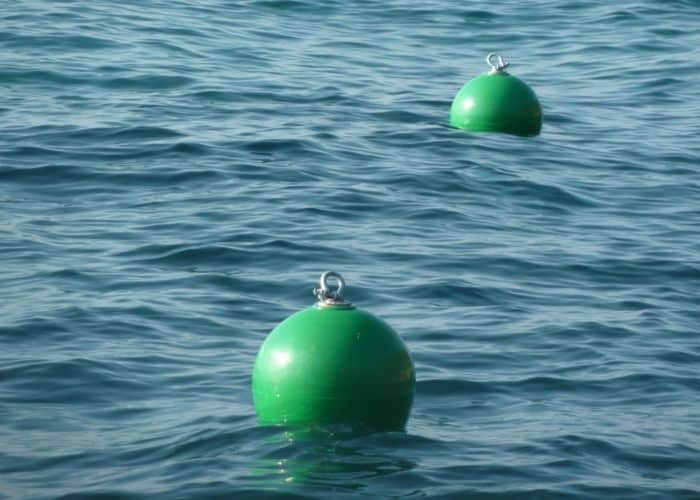
| Navigational (Lateral) | Red (conical/nun) and green (cylindrical/can) markers indicating channel sides. In the U.S. (Region B), “red right returning” means red on the right when heading upstream/inland. | Guide vessels through safe channels, mark boundaries of deep water. | USCG standards: Red even-numbered, green odd-numbered; IALA Region B. |
| Cardinal | Black/yellow with topmarks indicating safe passage direction relative to a hazard (north, south, east, west). | Warn of dangers like wrecks or shoals, directing away from hazards. | Used for larger or isolated dangers; quick-flashing lights for emphasis. |
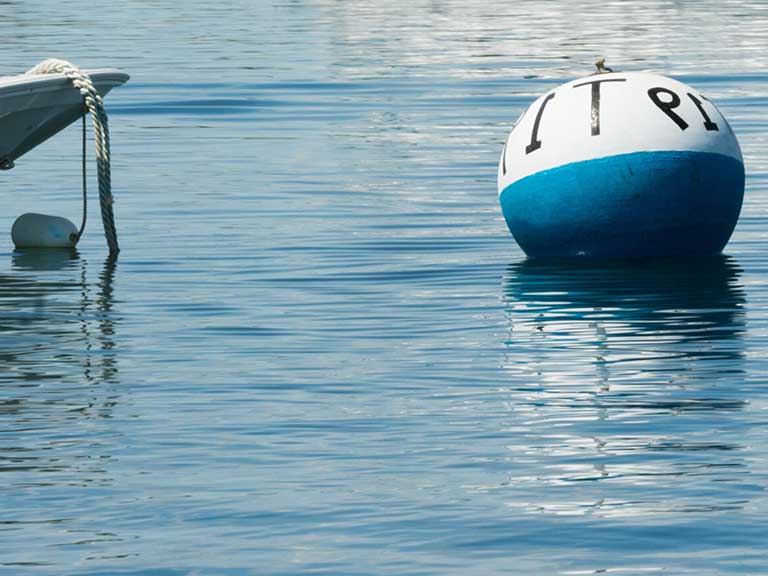
| Mooring Buoy | White or yellow floats with a blue band, anchored to the seafloor. | Provide secure tie-up points for vessels, protecting sensitive areas like reefs. | Halas system: Embedded pins; common in marine reserves. |
| Regulatory/Special Purpose | White with orange symbols (e.g., diamond for danger, circle for control). | Enforce rules like speed limits, mark anchorages, or collect data. | Includes information buoys (square) and hazard warnings; USCG-managed. |
| Isolated Danger/Safe Water | Black/red for dangers; red/white vertical stripes for safe mid-channel. | Signal isolated hazards or safe passages. | Flashing lights are part of the IALA system. |
What Are Buoys Used For: Key Applications in Maritime Operations
Buoys are key in the maritime world. They help with safe navigation, watching the environment, and finding lost vessels. They make maritime work safer and more efficient.
Navigation and Channel Marking
Buoys guide ships through waterways and around dangers. They mark safe paths and show where deep water is. This helps all kinds of ships stay on course.
- Standardized visual systems guide vessels through waterways and harbors.
- Buoys indicate the boundaries of deep water areas.
- Directional guidance is provided for vessels of various sizes.
Safety and Hazard Warnings
Special buoys warn of underwater dangers like rocks and wrecks. They help boats avoid accidents in unknown waters.
- Specialized buoys mark underwater hazards.
- Buoys help boaters avoid accidents.
- Hazard warnings are clearly communicated.
Environmental Monitoring and Research
Environmental buoys collect data on water quality and more. They help scientists understand the ocean and its changes. This data is crucial for research and studying the climate.
- Buoys collect data on water quality and temperature.
- They monitor currents, wave height, and other parameters.
- Data is used for scientific research and climate studies.
Search and Rescue Operations
Buoys help find lost ships in open water. Some buoys have GPS and can talk to other ships. This helps find boats in trouble.
- Buoys serve as reference points in open water.
- Specialized buoys are equipped with GPS and communication technology.
- They assist in locating distressed vessels.

Buoy Construction and Technology
Buoy technology is very important. They help with navigation and watching the environment. They are made with strong materials and the latest tech to last long and work well.
Materials and Design Considerations
Choosing the right materials for buoys is crucial. We use different foams for different needs. For example, some foams are better for the surface, while others can handle deep water.
- Buoyancy and durability are key considerations in material selection.
- High-visibility colors and reflective materials enhance visibility.
- Distinctive shapes communicate specific information to mariners.
Modern Technological Advancements in Buoy Systems
New buoy tech has made them better and greener. Solar lights are used to save energy and reduce harm to the environment. Buoys now have sensors and can send data in real-time.
- Solar power reduces reliance on conventional energy sources.
- Integrated sensors and monitoring systems enhance data collection.
- Advanced communication systems facilitate real-time data transmission.
Conclusion
Buoys are indispensable for safe navigation, environmental protection, and commerce, standardizing routes worldwide under IALA. For practicality, download a free buoy identification checklist from USCG or NOAA resources. If needing equipment, consider certified providers, but verify independently for compliance.
FAQ
A mooring buoy is a secure spot for boats to tie up. It helps boats stay safe in different water conditions.
Navigational buoys tell sailors about channels and dangers. They help find the safest path and warn of dangers.
Buoys have sensors to check water quality and track currents. They help with research, weather forecasts, and studying the climate.
There are many types of buoys. Some help with navigation, others with mooring, and some for monitoring the environment.
Buoys help mark where survivors or wreckage are. This guides rescue teams to the right spot.
Buoys use colors and lights to send messages to sailors. Different colors and patterns mean different things, like where the channels are.