Die korrekte Befestigung eines D-förmigen Gummifenders hängt von der Kontaktlinie, dem Untergrund und der Befestigungsmethode ab. Eine falsche Ausrichtung oder eine mangelhafte Abdichtung können zu lockeren Befestigungsteilen, Undichtigkeiten oder vorzeitigem Einreißen führen. Bei Henger Shipping Supplies verkaufen wir Gummischutzbleche Wir haben diese Probleme in der Praxis selbst erlebt. Dieser Leitfaden beschreibt Schritte, die Sie vor Ort durchführen können, um eine erfolgreiche Installation zu gewährleisten.
Grundlagen von D-Typ-Kotflügeln und Kontaktflächen
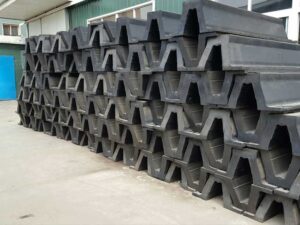
Die flache Rückseite eines Kotflügel vom Typ D Die Fender sollten bündig an der Montagefläche anliegen. Die gewölbte Seite berührt dann das Schiff. Dieses “D”-Profil bietet eine kompakte Form und eine stabile Befestigung und ist daher häufig bei Arbeitsbooten, Kaimauern und Pfählen zu finden. Ist der Kontaktpunkt am Rumpf jedoch zu hoch oder zu niedrig, wird die Schutzwirkung des Fenders beeinträchtigt. Zunächst muss der tatsächliche Kontaktpunkt ermittelt werden.
Das D-Profil verstehen
Die flache Rückseite muss bündig mit einer Wand oder dem Rumpf abschließen, um die Last gleichmäßig über die gesamte Auflagefläche zu verteilen. Beim Aufprall gibt die gewölbte Vorderseite nach und verteilt die Aufprallenergie auf eine nutzbare Fläche. Unebenheiten oder Spalten führen zu ungleichmäßiger Belastung der Bauteile. Sowohl die Größe des Kotflügels als auch ein bündiger Abschluss sind entscheidend.
Gängige Montageflächen
Betonkaiwände erfordern oft einbetonierte Anker oder Platten. Bei Stahlkonstruktionen bieten sich Durchgangsverschraubungen oder angeschweißte Halterungen an, wobei der Korrosionsschutz höchste Priorität hat. Die Rumpfmontage erfordert präzise Bohrungen und Abdichtung, um Leckagen zu vermeiden und die Beschichtung zu schützen. Achten Sie stets auf ausreichend Zugänglichkeit. Sie benötigen genügend Platz zum Bohren, Festziehen und Prüfen der Befestigungselemente.
Mehr erfahren: Wozu dienen Gummi-D-Kotflügel?

Planung und Standortbewertung
Eine zuverlässige Installation setzt das Verständnis der tatsächlichen Gegebenheiten, des Layouts und der Eignung des Standorts voraus. Definieren Sie zunächst den Betriebsbereich. Berücksichtigen Sie die Schiffstypen, ihre Anfahrwinkel und den Wasserstand. Legen Sie anhand dieser Informationen eine klare Anlegelinie fest. Überprüfen Sie anschließend die Montagefläche und planen Sie Bohr-, Abdichtungs- und Zugangsarbeiten.
Definition der “Anlegelinie” und der “Kontakthöhe”
Ignorieren Sie kosmetische Markierungen und konzentrieren Sie sich auf die tatsächliche Kontaktfläche des Schiffes. Verwenden Sie eine Wasserwaage oder einen Laserstrahl als einheitlichen Referenzpunkt. Wenn Sie Schiffe unterschiedlicher Größe warten, markieren Sie die höchsten und niedrigsten Kontaktpunkte. Ihre Fenderanordnung muss diesen gesamten Bereich abdecken. Im Zweifelsfall wenden Sie sich an das Betriebsteam oder suchen Sie nach alten Scheuerspuren an der Struktur.
Substratvorbereitung
Die Montagefläche muss eben sein, damit der Kotflügel fest sitzt und nicht verrutscht. Entfernen Sie abblätternde Farbe, Bewuchs und sonstige Ablagerungen, da diese die Abdichtung beeinträchtigen können. Bevor Sie in Beton bohren, lokalisieren Sie vorhandene Bewehrungsstäbe oder eingelassene Platten. Wenn Sie Durchgangsbolzen verwenden möchten, prüfen Sie den Zugang von hinten. Ist dieser nicht möglich, benötigen Sie Dübel oder Winkel.
Kotflügelabdeckung und -abstand
Die Form des Schiffes bestimmt den idealen Fenderabstand. Vergleichen Sie diesen mit Ihrer Projektplanung. Viele verwenden eine Faustregel basierend auf der Fenderbreite, aber es ist sicherer, die Abstände mit dem kleinsten zu erwartenden Schiff zu vergleichen. Die Endbearbeitung ist ebenfalls wichtig, da Risse oft an scharfen Kanten entstehen. Planen Sie abgerundete Enden oder Endkappen ein. Wenn Sie mit thermischer Bewegung oder Biegung rechnen, lassen Sie einen kontrollierten Abstand zwischen den Fendern, anstatt enge Stoßfugen zu erzeugen.
Prüftabelle vor der Installation (zur Verwendung vor Ort)
Scheckartikel | Was zu bestätigen ist | Warum es wichtig ist | Zu dokumentierende Beweise |
|---|---|---|---|
Kontakthöhenbereich | Höchster/niedrigster Rumpfkontaktbereich | Verhindert Montagefehler | Fotos mit markierten Linien, Notizen |
Zustand der Montagefläche | Ebenheit, Korrosion, Schmutz | Gewährleistet Lagerhaltung und Abdichtung | Fotos vor/nach der Reinigung |
Machbarkeit der Reparatur | Durchgangsbolzen- vs. Ankerzugang | Vermeidet eine Neugestaltung während der Installation. | Skizze, Ankerplan |
Lochplatzierung | Bewehrungs-/Plattenpositionen | Verhindert strukturelle Schäden | Scan-Ergebnisse oder Notizen |
Hardwarepaket | Material, Unterlegscheiben, Verschlüsse | Verringert Lockerung/Rostbildung | Stückliste, Material-IDs |
Versiegelungsplan | Dichtmittelart + Position | Kontrolliert das Eindringen von Wasser | Checkliste für die Abdichtung |

Reparaturmethoden: Hardwarepakete und deren Anwendungsbereiche
Wählen Sie die Befestigungsmethode abhängig vom Untergrund, seiner Tragfähigkeit und den zu erwartenden Bewegungen. Die meisten Installationen erfolgen mit Durchgangsbolzen, Ankern oder Schienensystemen. Die Verwendung der falschen Methode kann zum Versagen führen. Ziel ist eine dichte, dichte und funktionsfähige Konstruktion.
Durchgangsverschraubung
Bei zugänglicher Rückseite des Untergrunds, die die erforderliche Last tragen kann, eignet sich die Durchgangsverschraubung. Diese Methode ermöglicht die direkte Kontrolle der Klemmkraft und vereinfacht den Austausch. Bei Stahl muss die Trägerplatte ausreichend dick sein und die Kanten vor Rost geschützt werden. Bei Beton muss sichergestellt sein, dass die Schraube vollständig durch das Loch passt.
Anker oder eingebettete Platten
Verwenden Sie Anker oder Einbauplatten, wenn die Rückseite nicht zugänglich ist. Dies ist häufig bei der Sanierung von Kaimauern der Fall. Beachten Sie die Herstellerangaben zu Ankertyp und Einbautiefe. Die Bohrlochqualität ist entscheidend, insbesondere bei Verbundsystemen. Beschädigter Beton muss gegebenenfalls vor der Installation repariert werden.
Gleitschienen- oder Hängekonstruktionen
In Gebieten mit Gezeitenwechsel oder schwimmenden Pontons kann ein fest verschraubter Fender die korrekte Kontaktlinie möglicherweise nicht gewährleisten. Schienensysteme ermöglichen eine vertikale Verstellung und erleichtern die Wartung. Aufgehängte Systeme erlauben die Bewegung des Fenders bei gleichbleibender Ausrichtung. Da diese Systeme zusätzliche Metallkomponenten erfordern, sind Korrosionsschutz und regelmäßige Inspektion unerlässlich. Achten Sie darauf, dass der Gummi während der Bewegung nicht eingeklemmt wird.
Befestigungsstreifen-Einsätze
Viele Profile verfügen über einen innenliegenden Befestigungsstreifen, der die Last verteilt und ein Quetschen verhindert. Gängige Materialien sind Edelstahl, Aluminium und Hartpolymer. Der Streifen muss passgenau in das Profil passen und mit den Bohrungen übereinstimmen. Ohne einen passenden Streifen können sich die Befestigungselemente direkt in das Gummi eindrücken.

Installationsablauf: Markieren, Bohren, Befestigen, Abdichten
Ein präziser Arbeitsablauf für Markieren, Bohren, Positionieren, Festziehen und Abdichten reduziert Nacharbeiten. Bohren Sie erst, wenn die Anordnung bestätigt ist. Ziehen Sie die Befestigungselemente erst dann vollständig fest, wenn der Kotflügel korrekt positioniert ist. Arbeiten Sie abschnittsweise und prüfen Sie jeden Abschnitt anhand der Vorgaben. Beachten Sie die Sicherheitsvorschriften beim Heben und vermeiden Sie die Verwendung scharfer Werkzeuge an Gummikanten.
Positionierung und temporäre Befestigung
Beginnen Sie an einem messbaren Bezugspunkt und halten Sie den Kotflügel fest. Prüfen Sie, ob er mit der markierten Anlegelinie übereinstimmt. Falls Sie eine Befestigungsleiste verwenden, setzen Sie diese jetzt ein und achten Sie darauf, dass sie plan aufliegt. Fixieren Sie alles mit einigen provisorischen Befestigungselementen.
Bohren und Bohrlochvorbereitung
Bohren Sie Löcher, die zu Ihrem gewählten Befestigungssystem passen. Achten Sie darauf, dass die Löcher senkrecht zur Montagefläche verlaufen. Tragen Sie die erforderliche Schutzausrüstung und entsorgen Sie Bohrspäne. Überprüfen Sie bei Dübeln die Lochgröße und -tiefe. Reinigen Sie die Löcher nach dem Bohren gründlich, da Staub und Feuchtigkeit die Haftung beeinträchtigen.
Reinigung und Montage
Für eine optimale Abdichtung müssen die Bohrungen und die Montagefläche sauber sein. Entfernen Sie Verschmutzungen mit einer Bürste und Druckluft. Halten Sie den Bereich gegebenenfalls trocken. Prüfen Sie vor der Verwendung von Lösungsmitteln deren Verträglichkeit mit vorhandenen Beschichtungen. Eine saubere Oberfläche ist sowohl für die mechanische Befestigung als auch für eine dauerhafte Abdichtung unerlässlich.
Progressive Straffung
Ziehen Sie die Befestigungselemente über Kreuz fest, um den Kotflügel gleichmäßig zu fixieren. Dadurch verteilt sich die Klemmkraft gleichmäßig über die Befestigungsleiste. Halten Sie sich unbedingt an die Drehmomentvorgaben des Projekts und schätzen Sie das Drehmoment nicht. Zu festes Anziehen kann das Gummi verformen, zu lockeres Anziehen führt zu einem lockeren Sitz. Ziehen Sie die Schrauben stufenweise fest und überprüfen Sie nach jedem Durchgang die Ausrichtung. Sollte sich das Profil verdrehen oder verbiegen, stoppen Sie den Vorgang und korrigieren Sie dies.
Versiegelung und Kantenbearbeitung
Tragen Sie an Kanten und Löchern, durch die Wasser eindringen könnte, ein seewasserbeständiges Dichtmittel auf. Verwenden Sie es gleichmäßig. Falls Sie Endkappen verwenden, montieren Sie diese sorgfältig und vermeiden Sie abrupte Übergänge. Eine sauber verarbeitete Kante erleichtert die spätere Wartung.

Überprüfung und Fehlerbehebung
Eine Installation ist erst dann abgeschlossen, wenn Sie Ausrichtung, sicheren Sitz und Dichtheit überprüft haben. Planen Sie Nachkontrollen je nach Betriebsbedingungen ein. Bei der ersten Überprüfung werden Installationsfehler aufgedeckt, während durch Nachziehen der Schrauben eventuell gelockerte Teile korrigiert werden. Regelmäßige Kontrollen dienen der Erkennung von Lockerungen, Fehlausrichtungen oder Rissen. Dokumentieren Sie Ihre Ergebnisse, um Änderungen nachverfolgen zu können.
Annahme-Checkliste
- Prüfen Sie, ob die Kotflügellinie mit der Anlegeleine übereinstimmt.
- Stellen Sie sicher, dass zwischen benachbarten Einheiten ein ausreichender Abstand eingehalten wird.
- Prüfen Sie, ob alle Befestigungselemente die richtigen Unterlegscheiben und Sicherungsmechanismen verwenden.
- Prüfen Sie, ob das Dichtmittel vollständig abgedeckt ist.
- Überprüfen Sie die Gummioberflächen auf Schnitte oder Beschädigungen durch Handhabung.
Nachdrehmoment
Der Zeitpunkt für das Nachziehen der Schrauben hängt von der Hardware und den Belastungen ab. Halten Sie sich an Ihren Wartungsplan. Üblicherweise wird nach der anfänglichen Einlaufphase und den ersten Anlegemanövern eine erneute Überprüfung durchgeführt. Prüfen Sie sowohl die Drehmomentwerte als auch den visuellen Zustand. Diese Aufzeichnungen dienen als Grundlage für zukünftige Inspektionen.
Überprüfung der Symptomursache
Gehen Sie bei Problemen den Ursachen auf den Grund. Überprüfen Sie zunächst die Ausrichtung, die Befestigungselemente und die Dichtungsmasse. Stellen Sie sicher, dass die Befestigungsmethode für den Untergrund geeignet ist. Achten Sie besonders auf die Enden, da dort häufig Risse entstehen.
Tabelle zur Fehlerbehebung (Schnellanwendung im Außendienst)
Symptom | Wahrscheinlichste Ursachen | Erste Überprüfungen | Typische Korrekturmaßnahmen |
|---|---|---|---|
Verpasster Rumpfkontakt | Layout ignorierte Kontaktband | Prüfen Sie die Abriebspuren im Vergleich zur Linie. | Abschnitte neu positionieren |
Gelockerte Hardware | Unterdrehmoment, Vibrationen | Drehmoment prüfen, Muttern sichern | Nachziehen, Schlösser aufrüsten |
Gummiverformung | Zu festes Anziehen, schlechte Abzieher | Profilform prüfen | Leiste wieder einsetzen, nachziehen |
Wassereintritt | Schlechte Abdichtung, Schmutz | Dichtigkeit prüfen | Reinigen und wieder verschließen |
Kanteneinriss | Scharfe Kanten, keine Endkappen | Übergänge prüfen | Kappen montieren, Kanten abrunden |
Frühkorrosion | Falsches Material, Beschichtung beschädigt | Hardwarematerial prüfen | Ersetzen, Abdichtung verbessern |
Schlussfolgerung
Für eine zuverlässige Montage von D-förmigen Gummikotflügeln sind korrekte Ausrichtung und Befestigungsverfahren unerlässlich. Achten Sie besonders auf festen Sitz und dichte Abdichtung. Die Planung, Vorbereitung und das schrittweise Anziehen der Schrauben sind entscheidende Kontrollmaßnahmen. Erstellen Sie einen Zeitplan für Abnahmeprüfungen und Nachziehen und dokumentieren Sie Ihre Ergebnisse. So können Sie Probleme frühzeitig erkennen und wiederkehrende Störungen vermeiden.
FAQ
Richten Sie den Abstand nach dem kleinsten Schiff, das Sie aufnehmen müssen. Vergleichen Sie dies mit dem Kontaktbereich. Eine Faustregel für den Abstand, basierend auf der Fenderbreite, ist ein Ausgangspunkt, aber keine endgültige Lösung. Stellen Sie sicher, dass kein Teil des Schiffsrumpfs die Struktur zwischen den Fendern berühren kann.
Die Größe hängt von der erforderlichen Energieabsorption und dem verfügbaren Montageraum ab. Prüfen Sie den Kontakthöhenbereich und den Abstand. Wählen Sie ein Profil, das ohne Aufliegen an den Ecken passt. Nutzen Sie nach Möglichkeit Energieberechnungen. Andernfalls ziehen Sie einen Ingenieur zu Rate.
Die Befestigung ausschließlich mit Klebstoff funktioniert nur bei dafür vorgesehenen Systemen. Die meisten maritimen Installationen setzen auf mechanische Befestigung für einen sicheren Halt. Bei der Verwendung von Klebeankern ist eine sorgfältige Oberflächenvorbereitung unerlässlich. Wenn die Gegebenheiten vor Ort nicht kontrolliert werden können, sollten mechanische Befestigungen verwendet werden.
Wählen Sie das Material entsprechend der Korrosionsbelastung. Gängige Optionen sind Edelstahl oder korrosionsgeschützter Kohlenstoffstahl. Die optimale Wahl hängt vom Salzgehalt des Wassers und der Lage der Spritzwasserzone ab. Verwenden Sie geeignete Unterlegscheiben und Isolationsmethoden und halten Sie sich stets an die Projektvorgaben.
Die Prüfhäufigkeit richtet sich nach Verkehrsaufkommen und Schwere der Auswirkungen. Führen Sie eine Erstprüfung, ein planmäßiges Nachziehen der Schrauben nach frühem Anlegen sowie regelmäßige Sichtprüfungen durch. Systeme mit hohem Verkehrsaufkommen oder auf schwimmenden Strukturen erfordern häufigere Prüfungen. Dokumentieren Sie die Ergebnisse, um Trends frühzeitig zu erkennen.
Häufige Fehler sind das Bohren vor der Überprüfung des Layouts und eine falsche Kontakthöhe. Ungleichmäßiges Anziehen, mangelhafte Reinigung und fehlende Endbearbeitungen können ebenfalls Probleme verursachen. Verwenden Sie eine Checkliste, um diese Fehler zu vermeiden.