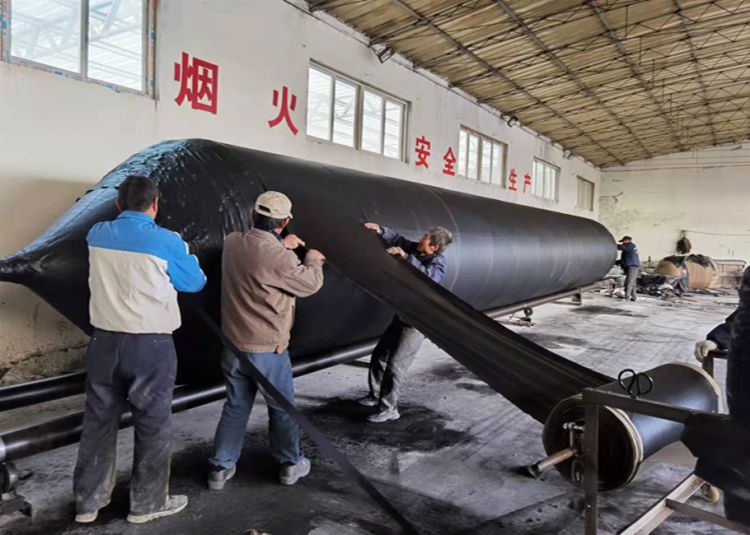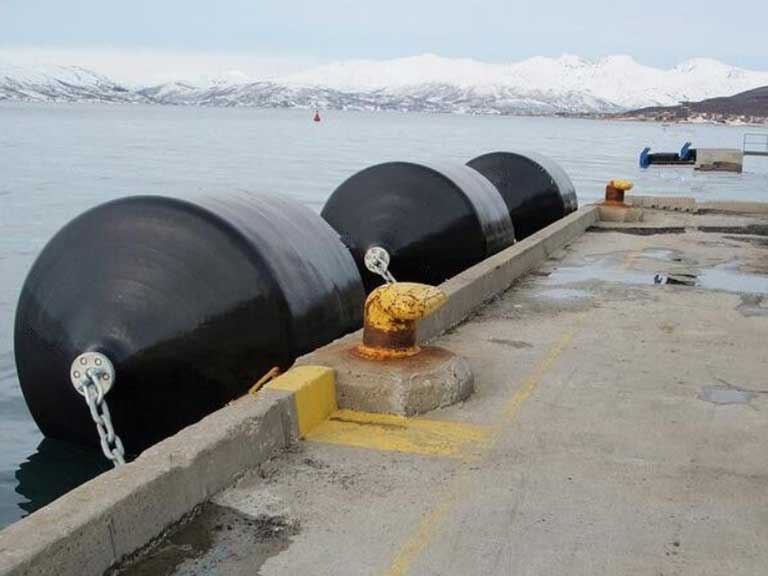
Foam fenders are essential marine protective devices designed to absorb impact energy during vessel berthing. They are widely used in ports, terminals, bridges, and open harbors to protect ships and structures from damage. Unlike pneumatic fenders, which rely on air, foam fenders use a solid foam core, ensuring consistent performance in harsh environments. They offer excellent energy absorption and low reaction forces, making them a reliable choice for demanding marine conditions.
In the following, HENGER will explain in detail what a foam fender is. What is its structure, and what does it do? To know the difference between it and a pneumatic fender, check Foam Fender VS Pneumatic Fender for expert advice!
Foam Fender Structure
Foam fenders are built with a durable, multi-layered design to ensure reliability. Key components include:
- Internal Steel Core or Chain System: This provides structural integrity and evenly distributes forces during impacts, ensuring stability in high-impact scenarios like large vessel berthings.
- Closed-Cell Foam Core: Made from EVA (ethylene-vinyl acetate) or PE (polyethylene) foam, this core prevents water ingress and maintains buoyancy even if punctured. EVA foam offers high flexibility and impact resistance, with densities ranging from 30-100 kg/m³. PE foam, with a lower density of 20-50 kg/m³, excels in moisture resistance.
- Reinforced Fiber Layer (e.g., Nylon Filament): This layer enhances tensile strength and protects the foam core from external damage. Even if the outer coating is compromised, the fender remains buoyant until repairs are made.
- Outer Polyurethane Elastomer Coating: A tough, spray-applied layer that resists UV radiation, hydrocarbons, saltwater, and extreme temperatures (-40°C to +60°C). It also provides corrosion resistance, meeting standards like ASTM D2240 for hardness and abrasion.
Foam fenders are designed to compress up to 60% of their diameter while absorbing energy, as outlined in PIANC guidelines.

Performance features
Foam fenders offer several advantages tailored to marine environments:
- High Energy Absorption: They absorb up to 40% more energy than pneumatic fenders of similar size. For instance, a 2m diameter fender can absorb 100-500 kNm of energy, reducing hull pressures to safe levels (under 200 kN/m² as per PIANC standards).
- Low Reaction Force: Foam fenders minimize stress on vessels and berths during mooring, with reaction forces often 20-30% lower than comparable systems.
- Durability: Thanks to their closed-cell foam core, foam fenders remain buoyant and functional even when damaged. With proper maintenance, their lifespan can exceed 10-15 years. However, they are more expensive upfront, costing 20-50% more than pneumatic options.
- Environmental Adaptability: Foam fenders perform well in harsh conditions, with velocity factors adjusting for real-world berthing speeds.
In practice, foam fenders have proven effective in reducing berthing damage by up to 30% in busy ports, as documented in updated PIANC guidelines.
Size and Customization
HENGER offers a wide range of sizes of foam fenders to meet the specific requirements of different customers. The common size ranges are as follows:
- Standard diameter range: 500mm to 4500mm, suitable for a wide range of vessels and marinas.
- Standard length range: 1000 mm to 9000mm, which can meet the requirements of different berths and operation scenarios.
- Support customization: If you need customization, you can contact HENGER engineers. We will provide you with detailed customized solutions to perfectly match your application needs.

How to Choose a Foam Fender?
To maximize the value of foam fenders, follow these steps:
- Assess Berthing Energy: Use PIANC formulas to calculate the required energy absorption (e.g., E = 0.5 M V² * C_e, where M is vessel mass, V is velocity, and C_e is the eccentricity factor).
- Consider Environmental Factors: Account for tides, winds, and corrosion risks.
- Budget Analysis: Weigh initial costs against long-term savings, as foam fenders require less maintenance than pneumatic options.
Summarize
These are just a few of the insights HENGER has to offer on pneumatic fenders, and HENGER’s foam fender systems provide long-lasting protection for your marina, thanks to their scientifically designed construction and material properties.
If you are looking for durable and high-performance foam fenders, then HENGER is the ideal partner for you. Contact us directly online for professional solutions. We will provide you with a comprehensive and professional marina protection strategy tailored to your needs.
FAQ
What is the expected lifespan of a foam fender?
Foam fenders typically last 10-20 years, depending on usage and maintenance.
What are the maintenance requirements?
Maintenance is minimal. Repairs usually involve patching the outer coating, costing 10-20% of the original price.
What are the disadvantages of foam fenders?
They have a higher upfront cost and weight compared to pneumatic fenders. However, their reliability and durability often offset these drawbacks.