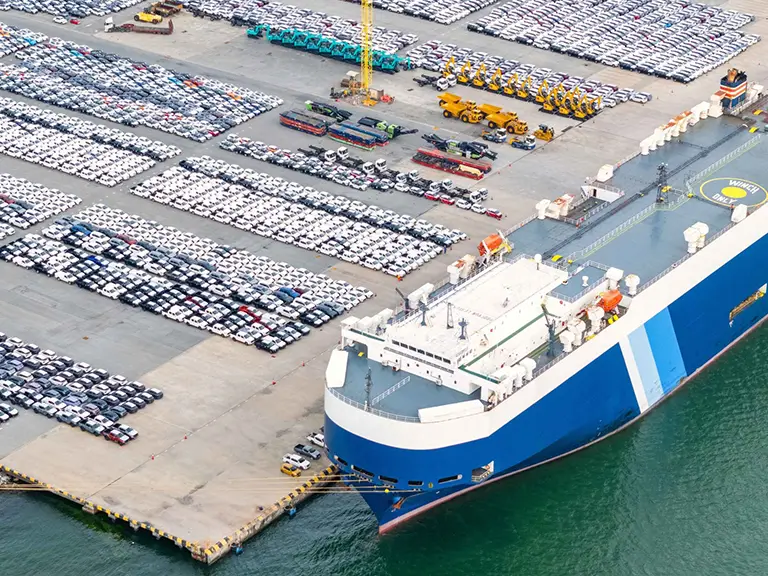
RoRo shipping moves wheeled cargo by rolling it onto and off a vessel with ramps. People use it for cars, trucks, buses, trailers, and heavy equipment on wheels.
If your cargo can drive, tow, or sit on a rolltrailer, RoRo makes port handling easier. Safe results need good loading control and cargo securing.
What RoRo Shipping Is and What It’s Used For?
RoRo means “roll-on/roll-off.” Cargo stays on wheels from port to port. Vehicles drive onto the ship via a ramp. They park on assigned decks.
RoRo works best for passenger vehicles and commercial fleets. It also handles high-and-heavy units like construction and farm machines. Project cargo fits if it meets deck limits.
- Think of RoRo as vehicle-style handling at sea. The terminal acts like a controlled parking structure.
- RoRo vessels have ramps and internal drive lanes. Vehicles roll on. They move through internal ramps. They stop at a set spot.
- Cargo stays on wheels. This cuts handling steps. It lowers risk compared to repeated lifts.
- Non-self-propelled cargo can be shipped by RoRo if it is towed or sits on wheeled gear. Rolltrailers often stay under the cargo during the voyage.
RoRo handles cargo by rolling. Container shipping boxes cargo into standard units. LoLo uses cranes to lift cargo on and off. RoRo uses driving, towing, and ramps instead of most lifts.
How RoRo Shipping Works Step by Step
RoRo works because the ship, terminal, and crew follow a disciplined flow: stage, roll, park, and secure. When each step is executed in order, the process is fast and predictable.
Port handling roles and flow: stevedores, staging, ramp control
In most ports, trained terminal handlers (often called stevedores) manage the vehicle movements. They coordinate staging areas, traffic lanes, and ramp timing to avoid congestion and collisions.
Your vehicle is usually checked in and staged in a designated lot before loading. This staging step matters because it prevents last-minute confusion on the ramp.
Loading via ramps: stern/side ramp entry and internal liftable ramps
Vehicles roll onto the vessel using a stern ramp or side ramp, depending on the ship and terminal layout. The ramp is the critical interface, so speed control and spacing are tightly managed.
Inside, many RoRo ships have internal ramps or liftable ramps connecting decks. Vehicles drive “up and in” to reach the assigned deck, similar to a multi-level car park.
Deck assignment basics: height/length/weight and clearance constraints
Deck assignment is not random; it is driven by dimensions and operational constraints. Height and clearance matter because internal ramps and deck beams limit what can pass.
Weight and axle loads also influence where units can be stowed. Heavy units may be placed where deck strength and securing points best match the load.

Securing essentials: lashing points, straps/chains, wheel chocks, verification before sailing
Once parked, vehicles are secured to the ship’s lashing points using straps or chains. Wheel chocks are commonly used to limit rolling, especially on decks with slight slopes.
The goal is to prevent movement under ship motions: rolling, pitching, and vibration. A secure unit protects itself, the ship structure, and neighbouring cargo.
Discharge and handover: roll-off, lot parking, onward transport
At the destination, the discharge sequence reverses the loading flow. Vehicles roll off the ramp, then move to a terminal lot for pickup or onward delivery.
Handover is smoother when condition checks are done consistently. Many shippers document pre-loading conditions to reduce disputes later.
Main Types of RoRo Vessels and Their Typical Uses
Different RoRo vessels exist for different cargoes and routes. Knowing the types explains why some shipments fit one service but not another.
- PCC: A Pure Car Carrier (PCC) focuses on passenger vehicles. It has multiple decks and efficient internal ramps for fast loading. PCCs serve major vehicle trade lanes. They handle high volumes and steady vehicle flow.
- PCTC: A Pure Car and Truck Carrier (PCTC) handles larger vehicles. It carries higher and heavier rolling cargo. PCTCs provide taller deck heights on some levels. This suits trucks, buses, and high-and-heavy units.
- ConRo: A ConRo vessel carries both RoRo cargo and containers. Containers usually go on top decks. Rolling cargo stays below. This fits shippers with mixed cargo types. It serves routes with strong demand for both vehicles and containers.
- RoLo: RoLo supports rolling and lifting. It loads RoRo cargo via ramps. It also handles lift-on cargo with cranes when needed. This helps where port facilities differ. It works when some units cannot roll easily.
- RoPax: RoPax vessels carry vehicles and passengers. They run on shorter sea routes and regional links. They handle cars and commercial vehicles. Schedules stay frequent due to short voyages.

Advantages and Trade-Offs of RoRo Shipping
RoRo offers efficiency for wheeled cargo. Safety and condition depend on careful handling and securing. Vehicles roll directly onto the ship. This speeds loading and unloading. It cuts time on crane lifts and container placement.
For fleets and standard cargo, operations run smoothly. Fewer handling touches lower risk. RoRo skips lifting many vehicles into containers. This reduces some damage risks. Still, it needs controlled driving, spacing, and lashing.
On the other hand, poor loading discipline can cause minor ramp or lane incidents. Professional handling and clear procedures matter. RoRo fits only certain cargo. Units must roll, tow, or mount on wheels. Other methods work better otherwise. Ports need ramp-compatible terminals and trained staff. Space is limited. Booking windows affect availability.
Safety Risks, Compliance, and How to Reduce Them
RoRo safety comes from managing risks and following processes. Serious issues often stem from errors, poor securing, or ramp/door failures.
- Human error leads because vehicles move actively. Poor stowage or securing lets cargo shift in heavy seas.
- Ship stability matters. Large open decks behave differently from container stacks. Doors, ramps, and systems stay critical for structure and operation.
- Crew inspects ramps, doors, and lifts regularly. Deck condition and lighting help ensure safe driving and security.
- Securing points must stay strong and well-placed. A weak point can affect many units.
- Training cuts errors, especially for complex cargo. Teams follow cargo securing guidance.
- Securing finishes and gets verified before departure. This step catches many issues.
How to Choose RoRo for Your Shipment
Choose RoRo when cargo fits rolling operations and meets terminal needs. A quick check avoids booking problems. If the unit drives, tows, or rolls on a platform, RoRo often works. Non-running units need a set handling method at both ports.
- Check dimensions and weight early. Height affects internal clearances and ramp limits.
- Confirm both terminals have RoRo ramps and handling. Agree on movement: self-drive, tow, or rolltrailer.
- Discuss special limits like ground clearance and turning radius. Clear answers prevent loading delays.
- Prepare the unit for safe handling. Clean it. Remove loose items. Document existing damage.
- Keep ownership and export/import papers ready. Organised paperwork avoids gate delays.

Conclusion
RoRo shipping moves wheeled cargo across oceans. Crew rolls it on and off ramp-equipped vessels. It suits cars, trucks, trailers, and heavy equipment when size and terminals match. The method cuts lifting and speeds port flow. Success needs careful ramp operations and proper securing.
FAQ
What is a RoRo ship, and how is it different from container shipping?
A RoRo ship carries wheeled cargo that rolls on and off via ramps. Container shipping packs cargo into standard containers. People choose RoRo for faster handling of vehicles and rolling equipment. Containers suit loose goods or items needing sealed protection.
How are vehicles and machines secured on board?
Crew uses straps or chains to lash to the lashing points. They add wheel chocks. This stops movement from ship motion and vibration. They verify security before sailing. Small errors can cause big problems at sea.
Can non-operational equipment be shipped via RoRo?
Yes. It works if the equipment tows or mounts on a rolltrailer or wheeled gear. Ports must agree on a safe loading and discharge method. If ports cannot handle non-running units, choose another method.
What are the main safety risks in RoRo operations?
Risks come from human error in driving, poor securing, and door/ramp issues. Stability and deck management matter due to large open decks. Training, maintenance, and pre-departure checks reduce these risks.
Is RoRo always the cheapest and fastest option for vehicles?
Not always. It often runs efficiently. Pricing and schedules vary by route demand and capacity. Large or unusual vehicles may hit clearance or deck limits. Match cargo fit, terminal ability, and timing for the best choice.