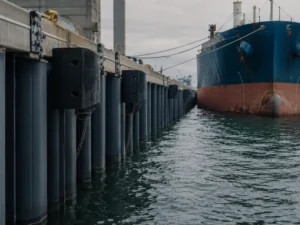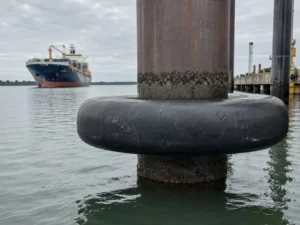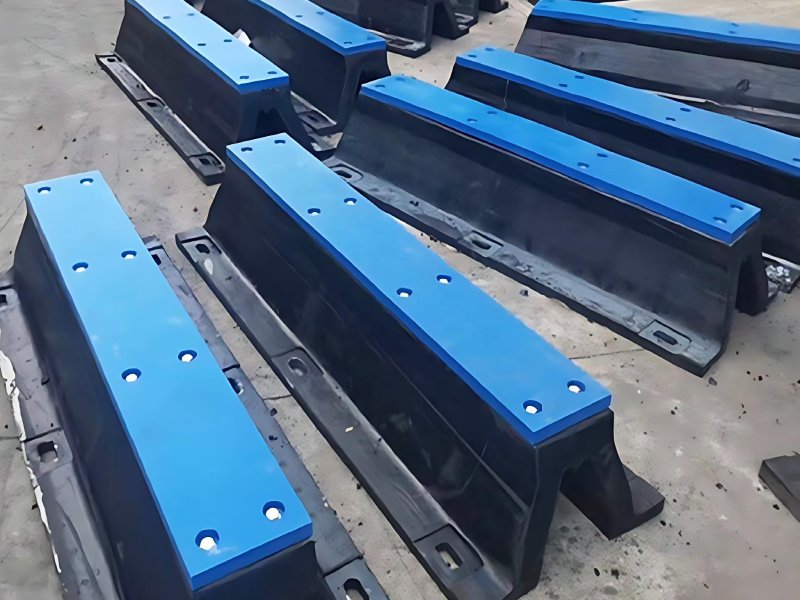
Arch fenders are vital components in marine engineering. These marine rubber fenders protect vessels and docks from impact damage during operations. People also call them V-fenders because of their curved, V-shaped profile. They act as shock absorbers. When a ship hits them, they compress to dissipate energy. This reduces stress on both the ship and the dock. The design has evolved from basic rubber bumpers to advanced systems. These modern versions use specific materials to perform better in harsh marine environments.
Key Features of Arch Fenders
Arch fenders offer durability, energy absorption, and stability. Manufacturers make them from high-quality rubber compounds. These blends often use natural rubber (NR) or styrene-butadiene rubber (SBR) to achieve the right flexibility and strength.
- Durability and Strength: Manufacturers bond vulcanized rubber to steel mounting plates. This construction resists weather, seawater corrosion, UV rays, and abrasion. They operate well in temperatures from -80°C to +80°C. They have a tensile strength of at least 16 MPa and a tear resistance of 70 kN/m. This strength ensures they last long in demanding spots like busy ports or tidal zones.
- Energy Absorption Capabilities: The V-shaped design can deflect up to 57.5% of its height. It absorbs docking energy while keeping reaction forces low. Engineers calculate this energy (E_N) as 0.5 × vessel mass × velocity² × correction factors. Velocity factors (VF) adjust the ratings for real speeds (0.2-0.5 m/s). This increases energy capacity by 1.03-1.31 times compared to lab tests done at 2-8 cm/min.
- Shear Performance and Stability: These fenders resist shear forces very well. Chains or brackets prevent too much horizontal movement. Friction levels vary. Rubber-to-steel friction is about 0.7. Adding UHMW-PE (ultra-high-molecular-weight polyethylene) pads drops this to 0.15. This stability helps vessels with bow flares or those docking in crosswinds.
- Low Maintenance: If installed correctly, arch fenders need little upkeep. They often last 10 to 20 years. Regular checks focus on wear, corrosion, and bolt tension. This makes them economical over time.
Compared to cone or cell types, arch fenders resist shear better in tight spaces. However, they may have slightly lower energy-to-reaction ratios in straight-on impacts.
Feature | Arch Fender | Cone Fender | Cell Fender |
|---|---|---|---|
Energy Absorption | High (deflection-based) | Very High (conical shape) | High (cylindrical cells) |
Shear Resistance | Excellent | Moderate | Good |
Typical Applications | General docks, corners | High-energy ports | Offshore platforms |
Maintenance Level | Low | Medium | Low |
Cost | Moderate | Higher | Moderate |
Types of Arch Fenders and Their Applications
Arch fenders come in various setups to meet specific needs. The choice depends on vessel size, use frequency, and the environment. Sizes usually range from 150mm to 1000mm in height. Performance data adheres to standards like BS6349 and PIANC 2002.
- Standard Arch Fenders with Rubber Contact Surface: These feature an all-rubber construction. They provide high friction (0.7 coefficient). This suits general docking and stops vessels from drifting in moderate conditions, like cargo terminals. They work best for small to medium vessels in sheltered harbors.
- Arch Fenders with Steel Pile Head Plates: These have steel tops for reinforcement. This extends their life by reducing friction and spreading loads. They suit busy ports with high energy absorption needs, such as container facilities.
- Arch Fenders with UHMW-PE Mats: These feature 20-30mm thick UHMW-PE layers. This lowers the friction coefficient to 0.15-0.2. It prevents hull scratches. These work best for sensitive vessels like ferries or yachts in low-tide areas.
- Customized Corner Arch Fenders: Designers angle or bevel these for quay corners. They fit precise, irregular structures. You often see them in complex setups like river docks or offshore wind farms.
Real-world example: In busy ports like Singapore, arch fenders improved energy dissipation. This reduced docking incidents by up to 30%.
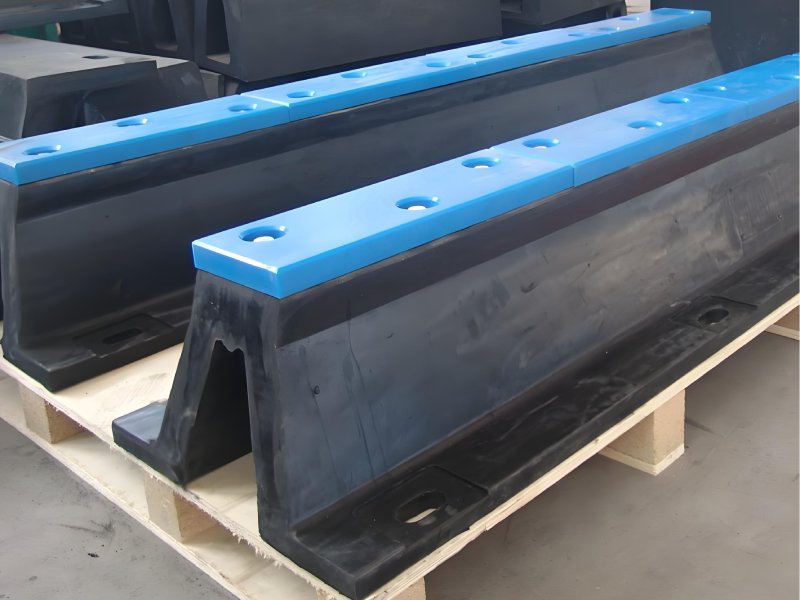
Installation of Arch Fenders
Proper installation ensures safety and performance. Plan the installation based on berth design, vessel types, and tides.
- Techniques: Bolt the fenders to a steel base through mounting holes. Use ropes for lifting. Insert washers and torque the bolts to manufacturer specs (e.g., M16-M36 for UHMW-PE models). Install them above the low tide line so you can access them easily.
- Mounting Options: Mount horizontally on straight walls or vertically on piles. Use angled mounts for corners. Keep pitch spacing to a maximum of 12-15m, or 0.15 times the vessel length. Include chains to control shear and tension.
Installation Checklist:
- Assess the site (check tides and vessel bow radius).
- Prepare the surface (clean and level it).
- Align and bolt the fender (typical torque is 100-200 Nm).
- Test for deflection and stability.
- Document the process with photos and torque logs.
Maintenance Best Practices
Arch fenders require low maintenance. However, routine checks can extend their life to 15-20 years. Focus on preventing corrosion and wear.
- Inspections: Inspect visually every six months. Check the rubber for cracks and the bolts for looseness. Check UHMW-PE for wear (allowance is 3-40mm). In corrosive areas, reapply epoxy coatings every 2-5 years (compliant with ISO 12944-5).
- Cleaning and Repairs: Remove debris quarterly. Seal small cracks with epoxy. Replace the fender if deflection drops below 50% of its rating.
Maintenance Task | Frequency | Action |
|---|---|---|
Visual Inspection | Every 6 months | Check for wear/cracks |
Bolt Tension Check | Annually | Retorque if needed |
Cleaning | Quarterly | Remove salt/debris |
Full Coating Reapply | Every 2-5 years | Per ISO standards |
Replacement | As needed (10-20 yrs) | If energy absorption <90% |
Best practice: Use virgin rubber compounds. Recycled materials often crack faster.
Conclusion
Arch fenders are key for marine protection. HENGER‘s arch fender products are of the highest quality. They offer reliable service in tough environments. You can choose from many types, including rubber-faced, steel-reinforced, and UHMW-PE-faced models. Need help picking the right size or understanding shear performance? HENGER’s service team is here to help. We offer customized solutions for your marine needs.
Frequently Asked Questions
If you use high-quality materials such as natural rubber or SBR compounds, install them correctly, and maintain them properly, these arch fenders can last 15 to 20 years or even longer. Furthermore, some manufacturers claim they can last over 20 years under moderate conditions.
Frequent high-energy impacts, excessive UV/saltwater exposure, pollution, or bad maintenance can all diminish the lifespan. When used in difficult conditions, high-quality virgin rubber and UHMW-PE facings can last for 10 to 15 years.
Arch fenders are ideal for:
- Small to medium-sized vessels (e.g., ferries, cargo ships under 50,000 DWT).
- Ports with limited mounting space, low to moderate tidal variations, or corner/quay protection.
- Applications needing strong shear resistance and low maintenance.
Cone or cell fenders may be better for very large ships or high-energy berths, like tankers and cruise ships, because they absorb more energy. Always choose based on site-specific berthing energy calculations that follow PIANC WG211.
They are among the lowest-maintenance fender types due to their simple, single-piece rubber design. Routine practices include:
- Visual inspections every 6 months for cracks, abrasion, or deformation.
- Checking bolt tension and corrosion annually.
- Cleaning debris/salt buildup quarterly.
- Reapplying protective coatings (e.g., epoxy per ISO 12944) every 2–5 years in corrosive areas.
Replace if deflection falls below 50% of the rated or significant wear occurs. PIANC recommends annual visual checks and a full maintenance plan to ensure long-term reliability.