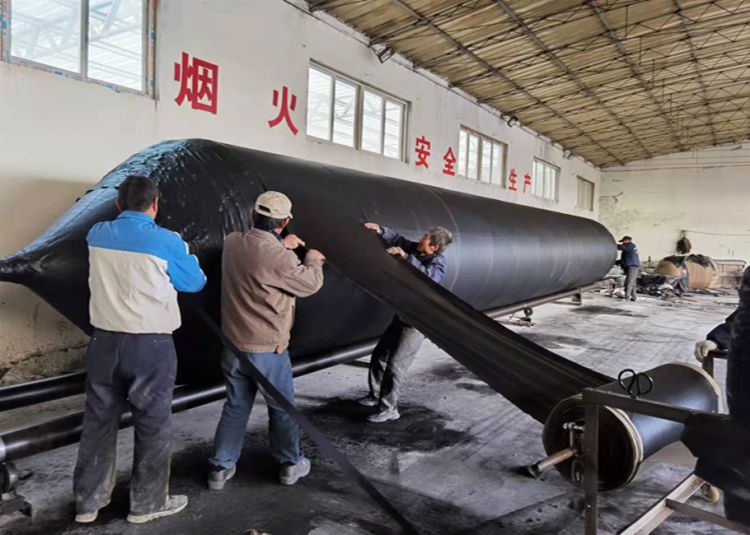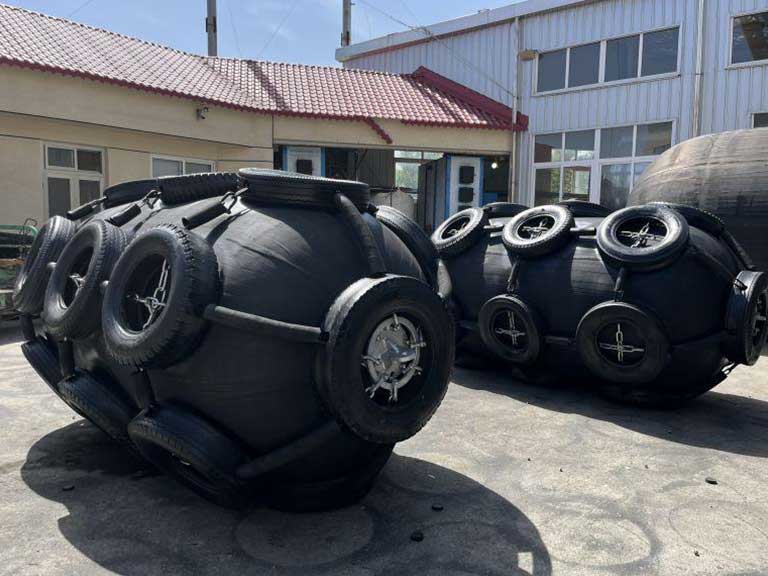
Pneumatic fenders protect ships and docks during berthing and mooring. The required energy absorption and allowable force depend on the vessel’s size, approach speed, and the berth’s design. These pneumatic rubber fenders are often called Yokohama-style fenders in the marine industry. We define their scope for ship-to-ship transfers, ship-to-terminal berthing, and offshore support, as each scenario presents different motions, contact angles, and safety needs.
What Are Pneumatic Fenders?
Pneumatic fenders are inflatable rubber devices. They’re key to keeping ships safe in the water. They’re made to handle the energy from docking and mooring. They protect ships from damage during these operations. They’re more effective than other fenders in many situations.
Components and Construction
A pneumatic fender’s performance relies on its carcass design, end fittings, and inflation hardware. These details vary by model, diameter, and supplier. Pneumatic fenders have three parts: an outer rubber layer, a tire cord layer, and an inner air bladder. The outer layer is tough, and the tire cord layer adds strength. Our fenders meet ISO 9001-2008 standards for quality.
Choosing the right materials is crucial. The layers are bonded for durability. We offer different sizes and types to fit various ships and docking needs.
How Pneumatic Fenders Work
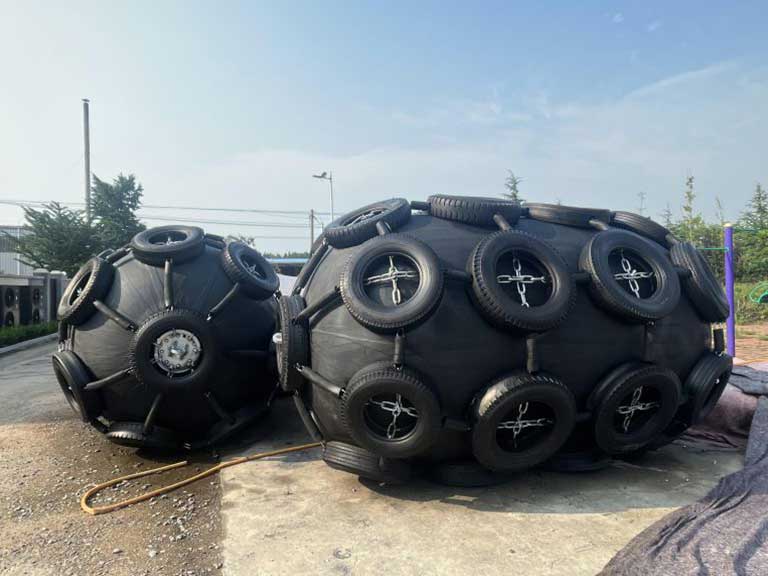
Pneumatic fenders work by compressing and absorbing energy when hit. This makes docking safer. We’ll explain how they do this and how they’re set up.
Energy Absorption Mechanism
Pneumatic fenders work by compressing air when hit. This cushions the impact and lessens the force on the ship and dock. There are two main steps: absorbing and dissipating energy.
- Energy absorption happens when the fender compresses on impact, taking in the ship’s energy.
- Energy dissipation occurs as the air inside the fender spreads out the absorbed energy, reducing the impact on the ship and dock.
The air inside the fenders makes them flexible yet strong. This lets them handle big impacts while keeping their shape.
| Stage | Description | Effect |
| Energy Absorption | Pneumatic fender compresses upon collision | Absorbs kinetic energy |
| Energy Dissipation | Compressed air dissipates absorbed energy | Reduces impact on the vessel and the dock |
Deployment and Installation Process
Installing pneumatic fenders involves several steps. These include inflating them, checking the pressure, and placing them correctly. Common setups include hanging fenders from a quay, suspending them between two vessels for STS transfer, or positioning them around dolphins and offshore structures.
Incorrect rigging can cause chafing, tearing, or valve damage before a berthing event even occurs. Knowing how pneumatic fenders work helps operators protect their ships and docks. They’re a vital safety tool at sea.

Comparing Pneumatic Fenders to Other Types
It’s important to compare pneumatic fenders with other types to understand their strengths and weaknesses. Pneumatic fenders are popular in the maritime world because of their special features. But how do they compare to other fender types?
Pneumatic vs. Foam-Filled Fenders
Pneumatic fenders and foam-filled fenders are both common in the maritime field. They both help absorb energy and lessen the impact of collisions. But they differ in how they are made and how they work.
Foam-filled fenders don’t leak air when they get a hole, but they don’t absorb energy as well after getting damaged. Pneumatic fenders, on the other hand, lose their function if they get a hole. But the air inside helps spread out the impact forces more evenly.
| Fender Type | Energy Absorption | Durability | Performance After Damage |
| Pneumatic Fenders | High initial energy absorption | Dependent on outer rubber integrity | Loses function if punctured |
| Foam-Filled Fenders | Absorbs 40% more energy than pneumatic fenders (according to some reports) | More resistant to punctures | Reduced energy absorption efficiency after damage |
Durability and Performance Differences
The durability and performance of pneumatic fenders compared to foam-filled fenders are key. Pneumatic fenders absorb energy well but rely on their outer rubber layer’s integrity.
Foam-filled fenders, however, still work somewhat after getting damaged, even if not as well. The choice between pneumatic and foam-filled fenders depends on the vessel’s needs and the operational conditions.

Maintenance of Pneumatic Fenders
A pneumatic fender’s service life is tied to impact frequency, UV exposure, abrasion, and maintenance quality. Therefore, you should verify any fixed lifespan claim against your site’s duty cycle. Pneumatic fenders need routine visual checks and pressure verification. Low pressure alters deflection, while high pressure can increase reaction force beyond the berth’s limit.
We recommend an inspection plan that matches your operating risk. A practical baseline often includes:
- Visual inspection for cuts, deep abrasion, bulges, and exposed reinforcement
- Pressure and leak checks based on the specified working pressure and temperature
- Hardware checks for valves, caps, end fittings, and any chain or net restraints
- Post-event inspection after abnormal berthing, heavy weather, or mishandling
- Storage checks for fenders kept off-site, as ozone, UV, and poor support can deform rubber
We treat repair decisions as acceptance-method decisions. The choice to continue using a fender depends on its remaining carcass integrity and the site’s acceptable risk level.
Learn More: How To Maintain Pneumatic Fenders?
FAQ
What does the outer rubber layer do?
The outer rubber layer’s function relates to abrasion exposure and the berth’s contact surface condition. It protects the reinforcement from cuts and wear and helps spread localized contact pressure. We advise adding edge protection and improving contact surfaces if repeated abrasion is causing premature skin damage.
How does a pneumatic fender reduce berthing damage?
A pneumatic fender reduces damage through controlled deflection, which lowers peak contact stress and spreads the load over time. It converts a vessel’s kinetic energy into air compression and carcass deformation work, thus reducing the peak force. We verify contact angle and placement height because poor placement can cause point loading and uneven deformation.
What happens if a pneumatic fender is punctured?
The outcome of a puncture depends on the leak rate and whether the fender can hold working pressure during the operation. A major air loss can reduce energy absorption and change reaction behavior, increasing collision risk. We recommend a contingency plan for rapid replacement, especially when a ship-to-ship transfer relies on a specific fender.
How often should pressure be checked?
Pressure check frequency depends on how critical the operation is, temperature changes, and historical leak behavior. Many operators conduct routine checks and add more after major impacts. The correct interval should be verified against the duty cycle and the supplier’s maintenance guide. We can align the check schedule with your inspection workflow.