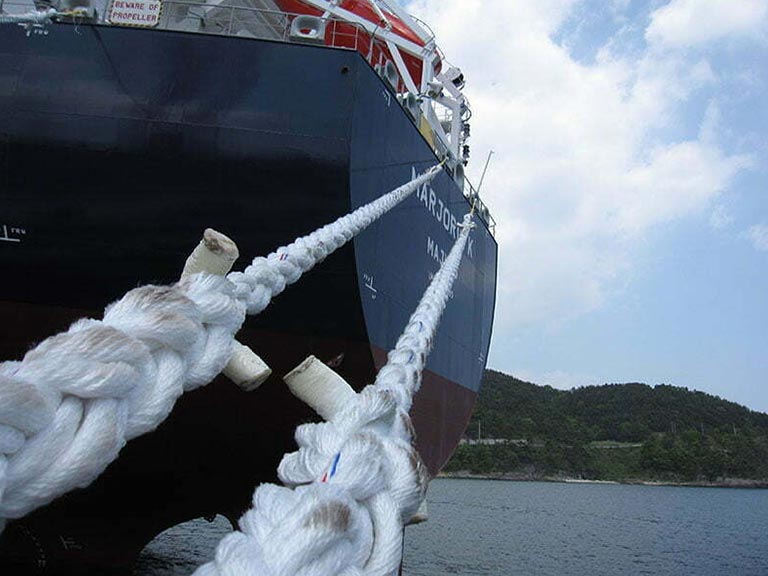
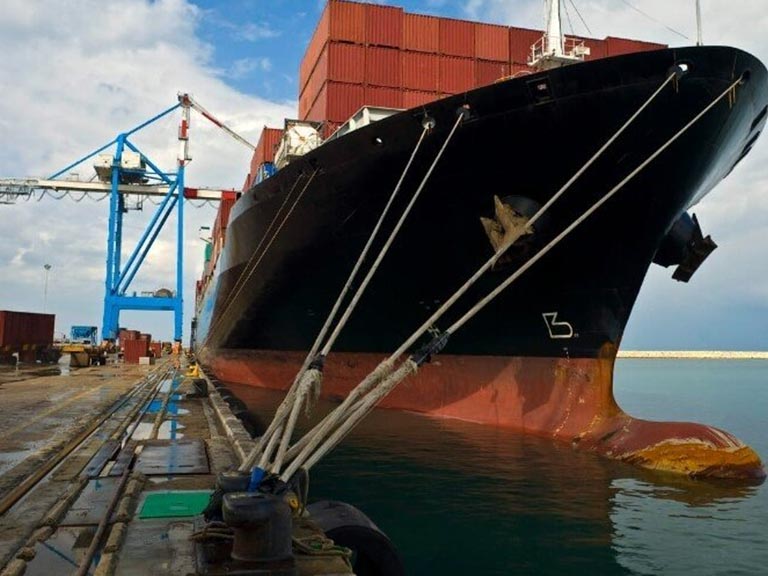
A mooring line is a rope, wire, or chain that secures a vessel to a fixed point. This keeps the ship in position at a berth or mooring. Its core job is to control a vessel’s movement against wind, waves, currents, and passing ships.
Mooring lines limit surge, sway, and yaw to keep the hull safe from hazards. A “mooring line” is not a complete system on its own. It is one load-carrying part of a setup that includes fittings, hardware, and shore equipment.
Key Parts & Basics of a Mooring Line
A mooring line is more than just its material type. How it is built, its ends, and its hardware decide how it handles loads and safety. The same size rope feels very different if it is 3-strand, double braid, or multi-plait.
Common rope builds include 3-strand, which is simple and elastic. Double braid offers good handling and resists rubbing. 8 or 12-strand ropes are often chosen for winch drums. Wire ropes vary by strand pattern and lay. These factors change how they handle fatigue and use.
End terminations and attachments are important because they focus stress. Match eyes, splices, thimbles, shackles, and fairleads to the line type to reduce rubbing, kinks, and heat damage. If you use mixed systems, like wire with synthetic tails, treat them as one unit. Manage the “weakest link,” not just the strongest part.
Main Types of Mooring Lines and Their Typical Uses
Chain – Heavy Catenary for Shallow/Fixed Moorings
The chain is a heavy option that resists scraping well. It creates a strong catenary effect (the curve of a hanging chain). Use it where the line touches the seabed or where long-term hold is a major concern.
Chain works best in shallow to moderate depths and fixed moorings. Its weight helps smooth out peak loads. Its main limits are its heavy weight and the risk of deck wear. You must manage stoppers, fairleads, and lead angles carefully.
Wire Rope – Low Stretch Strength for Heavy-Duty / Offshore Loads
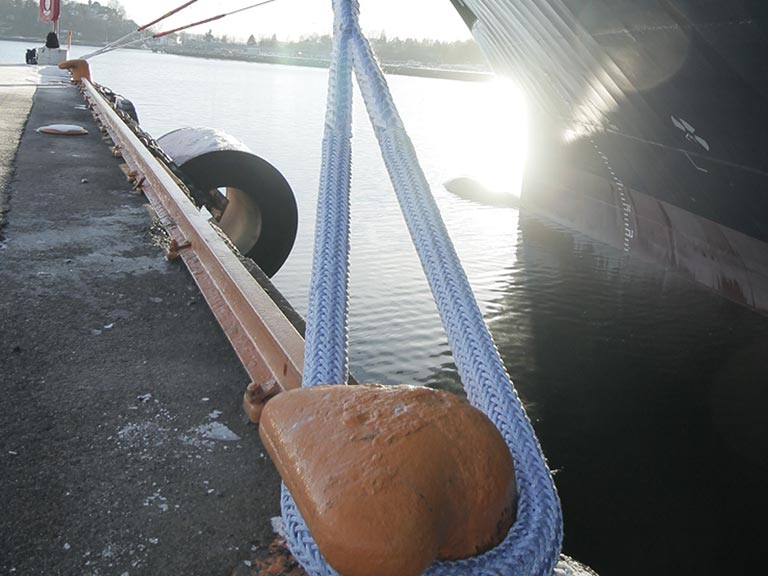
Wire rope is strong and stretches very little. It carries heavy loads well. It is common for heavy-duty mooring and offshore work where the line length must stay constant.
Wire rope works well under high tension. However, it is less forgiving than elastic ropes when loads hit suddenly. Its main limits are rust, internal fatigue, and safe handling. You must inspect it often for kinks, birdcaging, and broken wires.
Nylon Rope – High Elasticity for Shock-Loading Berths
Nylon is a synthetic rope known for stretching and absorbing shock. Pick it when you expect moving loads and sudden surges.
Nylon reduces peak loads on fittings and winches. This helps at berths exposed to wakes or ocean swells. Its limit is that it stretches more, allowing the vessel to move more. It may not work well if you need tight position control.
Polyester Rope – Low Creep Choice for Long-Term Docking
Polyester is strong and stretches less than nylon. It also resists UV damage well. It is a common choice for long-term mooring in marinas and harbors.
Polyester keeps its position stable with less stretch. It handles predictably. Its limit is lower shock absorption than nylon. You may need extra design margin if impact loads are common.
Polypropylene Rope – Floating Option for Light/Temporary Mooring
Polypropylene is light and floats. It is often used for small boats, temporary lines, or backup lines. It handles easily and costs less for light duty.
A floating line reduces the risk of tangling around small boats. Its limit is lower strength and durability compared to nylon or polyester. It is usually not the top choice for critical, high-load mooring.
HMPE (UHMWPE) Rope – High Strength-to-Weight for Deepwater / Handling Efficiency
HMPE is a high-performance fiber rope. It is very strong for its weight and stretches very little. Use it when handling weight, deep water, or speed matters.
HMPE ropes reduce strain on the crew. They improve work speed at equal strength levels. Its limit is that low stretch transfers peak loads directly. Controlling rubbing, bend radius, and loads becomes critical.
Aramid Rope – Low-Stretch Heat-Resistant Option for Specialized High-Load Use
Aramid fiber ropes are strong and stretch a little. They resist heat well and do not creep much. They work for specialized, high-load tasks where size stability matters.
Aramid performs well under high tension if you protect it. Its limit is that it is sensitive to rubbing and bending fatigue. You must protect against chafing and tight fairlead turns.
Quick comparison summary (typical tendencies):
Type | Stretch | Handling weight | Abrasion resistance | Typical use |
|---|---|---|---|---|
Chain | Low | High | Very high | Fixed/shallow moorings, high wear points |
Wire rope | Very low | High | High | Heavy-duty/offshore, controlled elongation |
Nylon | High | Medium | Medium–high | Shock-loading berths, dynamic environments |
Polyester | Medium | Medium | High | Long-term docking, UV-exposed moorings |
Polypropylene | Medium | Low | Medium | Light/temporary/utility lines |
HMPE (UHMWPE) | Low | Very low | High (needs chafe control) | Deepwater, high-strength-to-weight needs |
Aramid | Low | Low–medium | Medium (abrasion-sensitive) | Specialized high-load, heat-sensitive cases |
How to Choose the Right Mooring Line?
The right line meets your load needs with a safe margin. It should behave predictably in your berth and weather. Start with loads and motion. Then pick stretch behavior. Finally, confirm durability and handling.
Use this simple checklist:
- Load requirement: Base your choice on rated strength. Apply a safety factor to find a safe working limit.
- Motion control vs shock absorption: Choose more stretch for shock loads. Choose a lower stretch for position control.
- Chafe and lead angles: If the line runs over rough surfaces, prioritize abrasion resistance. Protection plan.
- Environment: UV, heat, chemicals, marine growth, and temperature swings change the line’s life.
- Handling constraints: Consider crew skill, winch fit, storage space, and wet weight.
Maintenance, Inspection & Retirement Criteria
Lines last longer when you inspect them as a routine. Check for damage where lines usually fail: contact zones, ends, and areas with heat or crushing.
For synthetic ropes, look for glazing (heat damage), fused fibers, hard spots, or bad cuts. Check for stiffness. For wire rope, watch for rust, broken wires, kinks, and thin spots.
Store and handle lines to prevent damage. Keep them clean, dry, and shaded. Avoid sharp bends and pinching. Use guards where lines run over hardware. Set clear retirement rules. If the line shows structural damage or severe wear, replace it. Do not “save it for later.”
Mooring Line Safety Essentials
Safety starts with one fact: a line under tension stores energy. A failure can release it violently. Treat every task as a “snap-back risk.” Keep people out of recoil zones.
Chafe is the most common silent killer of lines. Heat damage from slipping on bollards is next. Control chafe with proper leads, sleeves, and frequent checks.
Practical safety rules:
- Stay out of snap-back zones: Mark danger areas on deck.
- Avoid sudden shock loading: Coordinate winches and watch line angles.
- Stop and investigate: Look for glazing, smoke, heat, noise, or rapid wear.
- Use correct hardware and bend radii: This prevents crushing, sharp turns, and hidden damage.
Conclusion
As we deal with the difficulties of current maritime operations, we can’t stress enough how important good mooring lines are. As a professional marine equipment dealer, Henger Shipping Supplies understands that mooring lines are crucial for ensuring vessel safety. Boat owners and operators should think carefully about buying high-quality mooring lines. They will give you peace of mind and lower the danger of mooring problems.
FAQ
What is the difference between a mooring line and an anchor rode?
A mooring line ties a vessel to a fixed point like a dock. An anchor rode connects the vessel to the anchor. The rod works for anchoring geometry and the seabed. Mooring lines are built for berth control and repeated handling.
How do I know what breaking strength I need?
You need a line that holds your expected loads with a safety margin. Start with your vessel size and exposure to wind and waves. Pick a minimum breaking strength. Then apply a design factor to define a safe working limit.
Should I choose nylon or polyester for docking?
Choose nylon for shock loads and surging. Choose polyester for stable positioning and UV life. If your berth sees wakes, nylon reduces peak loads. Polyester feels “tighter” over time.
How often should mooring lines be inspected?
Check contact points often. Do a full inspection on a schedule. Inspect before use if you change berths, see rubbing, or face heavy weather.
What are the most common reasons mooring lines fail early?
Chafe, heat from slip, and poor ends cause most early failures. Wrong lead angles and rubbing damage a line faster than age. Protecting contact points offers the best return on investment.