The core term, ships’ mooring bollards, is key to maritime safety. They secure vessels to docks, preventing them from drifting during storms or in busy waters. A faulty mooring bollard could endanger an entire cargo, making proper installation and inspection critical. Henger Shipping Supplies is a top manufacturer of marine equipment. In this article, we dive into how mooring bollards work with their equipment to ensure mooring safety. We also showcase how mooring bollards withstand wind and tides, keeping ships safe while docked or anchored.
Understanding Ship Bollards
Ship Bollards keep ships safe by anchoring them to the dock. This is critical during loading and unloading as well as in bad weather. They connect the vessel to the dock and spread the force to prevent damage.
Ship Bollards can withstand huge loads. Cast iron and steel bollards can carry loads of up to 200 tons. They hold the vessel in place with mooring cables and absorb the impact of waves. Conventional T-bollards have 4 fixing points to make the vessel more secure. And they work well with pneumatic fenders to protect harbors and marinas.
Originally, bollards were just wooden stakes. Now they are made of steel for use in heavy harbors and ductile iron for added strength. New designs, such as curved-head bollards, reduce rope wear by 15 percent.
These changes are in line with the increase in ship size and higher safety standards. They ensure that the bollards meet the demands of today’s shipping.
In addition, the extra galvanized coating prevents rust and extends service life. With regular inspections every 6 months, they have a service life of 20-30 years. Foam Fender Port protects the hull of the ship and ensures smooth operations in the harbor.
Types of Bollards for Ships
Bollards must match the vessel’s size, load requirements, and environmental conditions. Below is a comparison of common types:
| Type | Description | Typical Load Capacity | Best For | Pros | Cons |
|---|---|---|---|---|---|
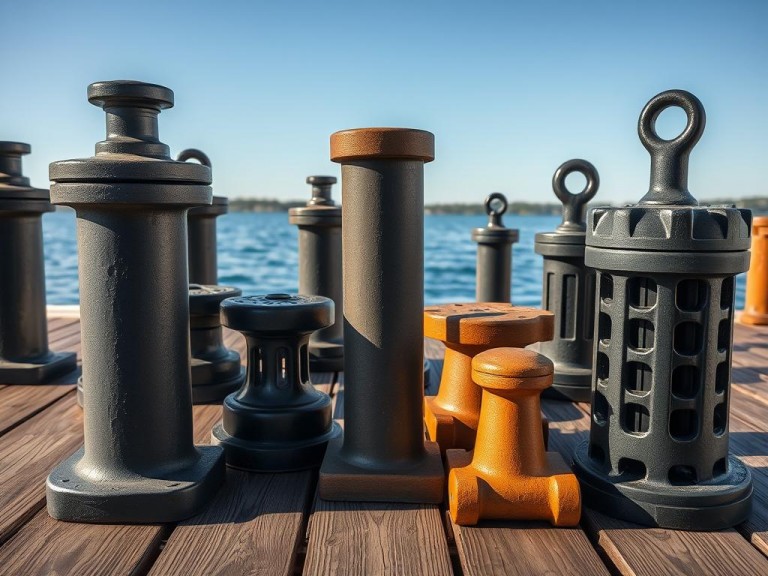
| Single Bitt (Post) | Simple cylindrical post for one or two lines. | Up to 50 tons | Small vessels, calm marinas | Space-saving, cost-effective | Limited load, less versatile |
| Double Bitt | Two posts for multiple lines, allowing better force distribution. | Up to 50 tons | Ports with smaller boats | Flexible mooring | Moderate strength |
| T-Head (T-Bollard) | T-shaped head for high loads and multi-directional pulls. | Up to 200-300 tons | Cargo ships, oil rigs, LNG terminals | High capacity, secure | Bulkier, higher cost |
| Horn (Staghorn) | Horn-shaped for varying line angles. | Up to 100 tons | General ports with variable tides | Versatile angles | Rope slippage if not secured |
| Kidney (Cleat) | Smooth, curved edges to minimize rope wear. | 5-35 tons | Recreational ports, marinas | Reduces wear, easy to use | Lower capacity |
Materials like steel resist corrosion with proper coatings, while aluminum suits lighter, onshore use. For high-tide areas, kidney designs are ideal. In typhoon-prone ports, add 25% extra capacity. Always verify against standards like ISO 13795 for welded steel bollards.
Basic Steps for Proper Installation of Ship Bollards
Proper installation of a marine bollard is essential to ensure its safety in rough sea conditions. Follow these steps to ensure that your bollard is durable and meets industry standards.
Site Preparation and Foundation Requirements
Conduct soil tests to determine foundation depth, ensuring it handles wave forces. Use grout with at least 60 MPa strength for anchor bolts. Position bollards every 15-30 meters or 15% of the ship’s length for even load distribution, aligning with fender systems.
Installation techniques for different dock materials
- Concrete piers: Embed in pre-drilled holes using epoxy resin. Depth should exceed screw burial for stability.
- Timber piers: bollards are secured to treated timber with stainless steel square head bolts.
- Steel deck: Weld brackets to the deck and secure bollards with approved fasteners.
Henger recommends that bollards be positioned in alignment with the fender system for even loading.
Post-Installation Testing and Certification
Each marine mooring bollard is required to be tension tested at 150% of the rated load. An outside company inspector will check them for compliance with ISO 12322. You will need to:
- Material certification
- Load test report
- Manufacturer’s installation guide
Common Installation Challenges in Ports
Harbors face rainfall and strong winds. Below are suggestions for local teams:
- For wet areas, please choose corrosion-resistant stainless steel.
- Reinforce foundations in areas with high tidal changes.
- Work with local government authorities for customs clearance of bollards.
Harbor Bollard Maintenance Best Practices
Keeping harbor, dock, and mooring bollards in good condition is critical. Without regular maintenance, they can fail, putting vessels and buildings at risk.
- Check daily for loose parts, cracks, or foundation problems.
- Check cables and mooring points monthly for wear and tear.
- Have them inspected annually by a certified expert to ensure their safety.
Choose marine-grade ductile iron bollards from a trusted brand. They can withstand damage from seawater. Apply an epoxy coating and use sacrificial anodes to protect the metal. Clean dock bollards every three months and recoat them every 15 years.
If your bollards have large cracks, foundation problems, or worn coatings, they need to be replaced with new ones. Fix minor problems like loose bolts or minor rust immediately.
Choosing the Right Heavy Duty Bollard for Your Vessel Size and Type
Choosing the right offshore bollard starts with the size of the vessel. Heavy-duty bollards must match the vessel’s displacement to avoid structural failure. Use this guide to match bollard strength to your vessel:
- Under 2,000 tons: 10-30 tons capacity.
- 2,000-10,000 tons: 30-100 tons.
- Over 100,000 tons: 150-300+ tons, or storm bollards >250 tons.
Add 25% extra capacity for ports facing typhoons. Use a kidney-shaped design in low-tide areas, but choose T-bollards for high-strength anchoring. Materials are also important:
- Ductile iron: Best for corrosion resistance, but expensive.
- Cast steel: The strongest option, but requires regular maintenance.
Spacing is also important – place bollards every 15-30 meters or 15% of the ship’s length to evenly distribute the load. Check the mooring angles against international standards: 45° on the bowline and up to 30° vertically. Consult a certified bollard manufacturer to ensure compatibility with existing marina infrastructure.
Conclusion
High-quality bollards, when selected, installed, and maintained properly, minimize risks and costs. Regular inspections (every 6-12 months) and adherence to standards like ISO can ensure 25+ years of service. Training crews reduces errors by up to 40%. For optimal performance, integrate with fender systems and prioritize safety over cost.
FAQ
A boat bollard is a strong, round structure made of cast iron, steel, or concrete. It is used on docks and ships to hold them in place. It helps transfer the force of the boat to the dock, thus allowing for some movement caused by tides and wind.
Choosing the right bollard means considering the size of the vessel and the required mooring force. In addition, the weather and the needs of the harbor have to be considered. Talking to a bollard manufacturer can help you find the safest and most efficient bollard.
There are many different types of bollards, such as T-bollards, bollards, and double bollards. They are made of materials such as iron, steel and aluminum. Some bollards are designed to be quick-released or floated to accommodate different marine uses.
Dock bollards require regular inspection. Check for wear and tear, corrosion, and structural problems. An annual assessment is key to keeping them in good working order.
Use materials suitable for marine use, apply protective coatings, and clean frequently. In areas of severe corrosion, use anodes and maintain them well.
Decisions are made based on the extent of damage, safety, cost, and downtime. Consulting a marine expert can help you make the right choice.