كشركة رائدة في تصنيع المعدات البحرية, we often get asked: How do ships safely swap cargo at sea or in port? The answer is Ship-to-Ship (STS) transfer operations. STS transfers handle different cargoes like crude oil, petroleum, chemicals, liquefied gas, and dry bulk. This complex process needs special equipment and steps to safely move cargo between ships.
What Is a Ship-to-Ship Transfer?
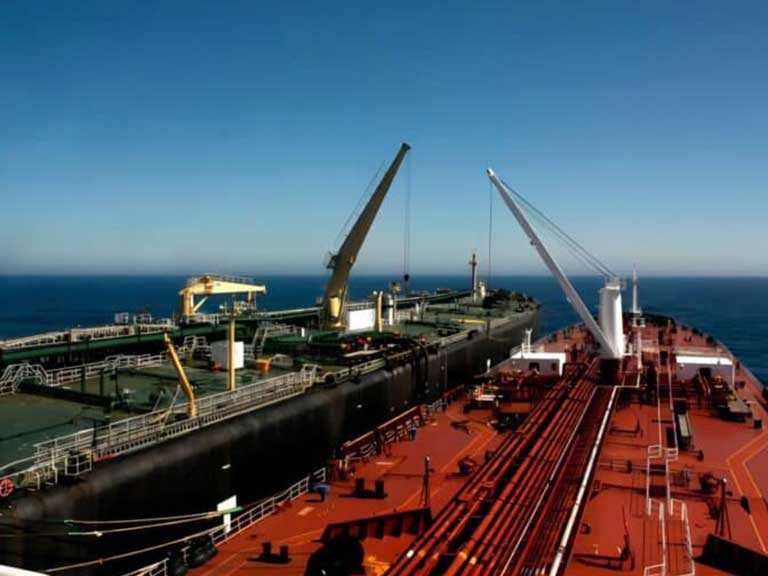
A ship-to-ship (STS) transfer moves cargo from one vessel to another. This happens either at sea or in port. No shore terminal is involved.STS operations handle a wide range of cargo types. These include crude oil, refined petroleum products, liquefied gases, bulk chemicals, and dry bulk commodities.
Three Types of STS Operations
Not all STS transfers are the same. The setup depends on the environment and the vessels involved.
- Underway transfer: Both vessels move at the same speed and heading. One vessel comes alongside the other while both are in motion. This is complex and requires calm sea states.
- At-anchor transfer: One vessel is anchored. The other vessel moors alongside it. This is more stable and more common for liquid bulk cargo.
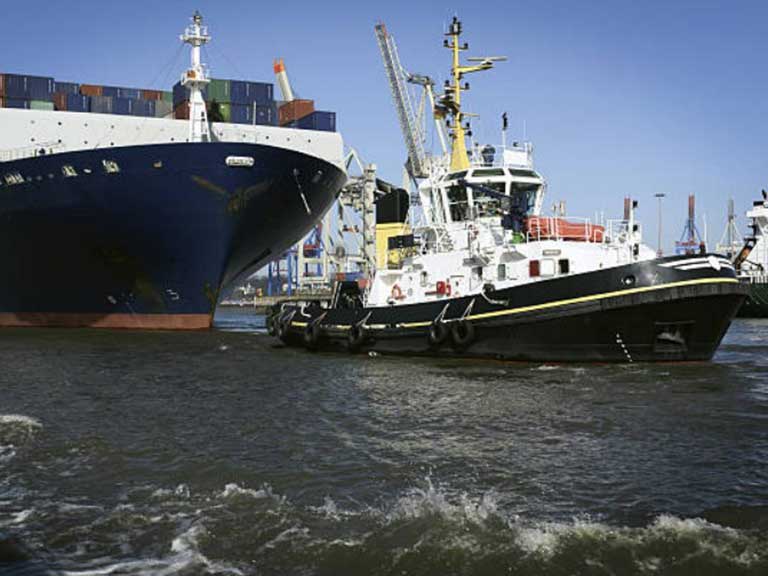
- Port alongside transfer: Both vessels are moored in port. One is tied to the berth; the other moors against it. This is the simplest setup but requires enough port space and depth.
Each type requires different mooring arrangements, fender configurations, and risk assessments.
الإطار التنظيمي لعمليات النقل من سفينة إلى أخرى
STS operations are governed by several overlapping international rules. Understanding each one matters.
- MARPOL Annex I (Regulation 41): This is the primary regulation for oil cargo STS transfers. It requires ships to have a shipboard oil pollution emergency plan (SOPEP) and to follow strict procedures to prevent spills. It applies to all oil tankers above 150 gross tonnage.
- كود ISM: The International Safety Management Code applies to all vessels. It requires each company to document STS procedures. These procedures must cover risk assessment, communication protocols, and emergency response.
- IBC Code: The International Bulk Chemical Code governs vessels carrying hazardous liquid chemicals in bulk. For chemical STS operations, this code defines cargo compatibility, tank venting requirements, and personnel protection standards.
- IGC Code: The International Gas Carrier Code applies to LNG and LPG carriers. It sets requirements for cargo containment, pressure relief, and gas detection during transfers.
- OCIMF Ship-to-Ship Transfer Guide: This is the industry’s primary operational reference. The guide covers mooring arrangements, fender deployment, hose connections, and checklists for each cargo type. It is not a legal instrument, but port states and oil majors often require compliance with it.
المعدات الأساسية للعمليات الآمنة لعمليات STS الآمنة
Choosing the right equipment protects both vessels and prevents environmental incidents.
أنظمة الحاجز
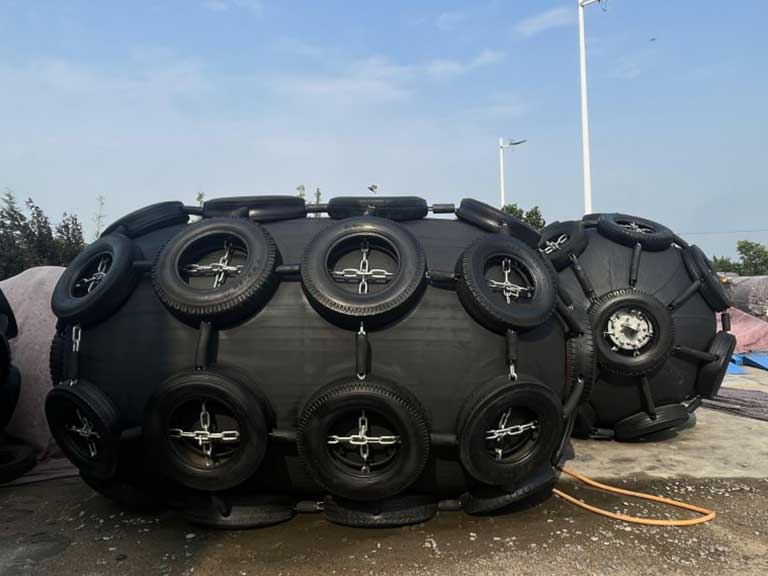
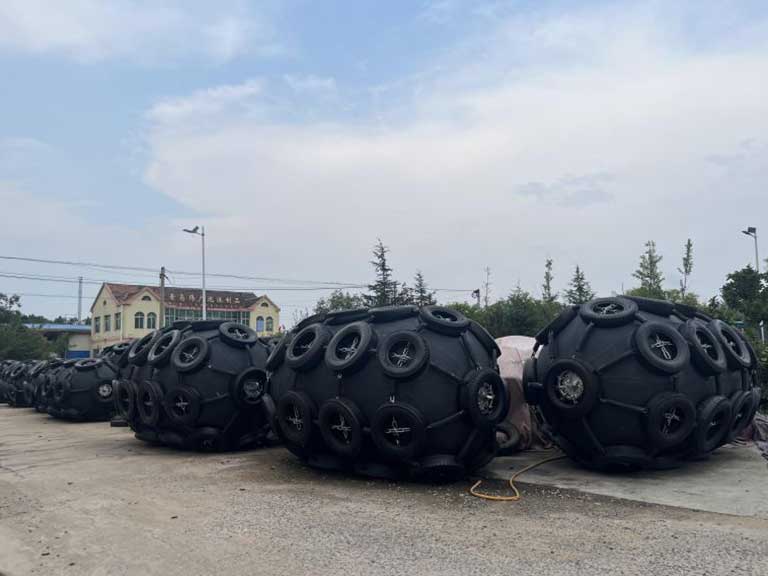
Fenders absorb the energy when two vessels make contact. Choosing the wrong size or type leads to hull damage or fender failure.
The required fender energy absorption depends on vessel displacement and the relative approach velocity. A simple approximation:
Required energy (kNm) = ½ × virtual mass of smaller vessel (tonnes) × approach velocity² (m/s)
For a typical VLCC-to-Aframax STS operation at 0.15 m/s approach speed, the required energy absorption is typically 200–400 kNm. This usually calls for Type II or Type III pneumatic fenders with a diameter of 2.0 m or larger.
The main fender types used in STS operations:
| Fender type | الاستخدام النموذجي | Key standard |
|---|---|---|
| درابزين هوائي | Open sea and at-anchor STS | OCIMF Guidelines for the Purchasing and Testing of Foam Pneumatic Fenders (2009) |
| Foam-filled Fender | Port alongside and sheltered waters | PIANC 2002 Guidelines |
| درابزين مطاطي | Low-energy contact, slow operations | ISO 17357 |
Pneumatic fenders must be checked before each deployment. The minimum checks are: inflation pressure (typically 0.05–0.08 MPa), external surface condition, chain net integrity, and sling load ratings.
خراطيم نقل البضائع
Hoses must be rated for the specific cargo being transferred. Using an incompatible hose is a common cause of spills.
The GMPHOM (Guidelines for the Purchasing and Testing of Marine Hoses for Offshore Moorings) standard provides specifications for floating hoses. For STS operations, the key parameters are working pressure, design pressure, inner diameter, and cargo compatibility.
Each hose string must be pressure-tested before the operation. The test pressure is typically 1.5 times the working pressure.
معدات الإرساء
Mooring lines keep both vessels in a stable, controlled position. Line tension must be monitored throughout the operation.
Mooring lines should meet the minimum breaking load (MBL) requirements specified in OCIMF’s Mooring Equipment Guidelines (MEG4). The number and arrangement of lines depend on vessel size and the expected current and wind loading.
Use synthetic fiber lines rather than wire for STS operations. Wires are more dangerous when they part.

الموظفون الرئيسيون في النقل من سفينة إلى أخرى
تعتمد سلامة ونجاح عمليات خدمات الدعم الفني والتقني على مهارات الموظفين الرئيسيين. فهم يحتاجون إلى معرفة وخبرة متخصصة للتنسيق والتنفيذ الفعال.
الشخص في الرقابة الاستشارية الشاملة (POAC)
يشرف مركز مراقبة العمليات على عمليات نظام دعم العمليات الخاصة. فهي تضمن تنفيذ العملية بأمان وكفاءة. وفي بعض الأحيان، يتولى ربان السفينة الأم هذا الدور.
المشرف على خدمات الدعم الفني والتقني (STSSI) وفريق الدعم الفني والتقني
بالنسبة لعمليات نقل البضائع الكيميائية والغاز، يلعب معهد النقل البحري الدولي STSSI دوراً رئيسياً. فهم بحاجة إلى معرفة كيفية التعامل مع هذه الأنواع من البضائع بأمان. ويشمل فريق الدعم موظفي الإرساء ومناولي الخراطيم ومراقبي السلامة، وجميعهم لهم أدوار مهمة.
يجب أن يقدم مقدمو خدمات STS ما يثبت مؤهلات المشرفين وخبراتهم قبل بدء العمليات. بالنسبة للعمليات الطويلة، من المهم وجود عدة مشرفين. وهذا يضمن الإشراف على مدار 24 ساعة دون مخاطر تتعلق بالسلامة بسبب الإرهاق.
Step-by-Step Operational Procedure
Step 1: Pre-Transfer Planning
Before any vessel movement, the POAC and both masters must complete a joint risk assessment. This covers:
- Weather and sea state limits (maximum allowable wind speed, wave height, current)
- Communication plan (VHF channel, language, reporting intervals)
- Emergency shutdown criteria
- Compatibility check for all cargo handling equipment
- Verification of both vessels’ cargo tank gauging systems
The OCIMF STS Transfer Guide provides a pre-transfer checklist in Appendix A. Both masters must sign off on this checklist.
Step 2: Approach and Mooring
The approaching vessel must keep speed below 0.15 m/s at the moment of first contact. Higher approach speeds cause fender overload and potential hull damage.
Fenders must be deployed before the vessels make contact. Position fenders at the main cargo manifold area and at any potential high-contact points along the hull.
Mooring lines are passed and secured in this order: breast lines first, then spring lines. This prevents the vessels from drifting apart or surging fore and aft before all lines are in place.
Step 3: Cargo Transfer
Do not start the cargo transfer until all pre-transfer checklists are complete and signed.
Start pumping at a slow rate. For most liquid bulk transfers, the initial rate is no more than 10% of the agreed maximum rate. Increase the rate gradually while watching for pressure rises, hose strain, or mooring line tension changes.
Monitor these points continuously throughout the transfer:
- Hose connections at both manifolds (look for weeping or strain)
- Mooring line tension (retighten or slacken as the vessels’ drafts change)
- Tank gauging on both vessels (cross-check every 30 minutes)
- Weather conditions against the agreed limits
Maintain radio contact with the other vessel at intervals of no more than 30 minutes.
Step 4: Completion and Disconnection
Stop pumping before the final cargo quantity is reached. This avoids pressure surges in the hose string.
Drain and purge hoses before disconnecting them. For volatile cargoes, use an inert gas purge. Disconnect manifold connections only after blanks are in place on both sides.
Mooring lines are released in reverse order: springs first, then breast lines.
تدابير السلامة وإدارة المخاطر
تُعد السلامة وإدارة المخاطر أمرًا حيويًا في عمليات النقل البحري التجاري والخدمات اللوجستية. هذه العمليات معقدة وتنطوي على الكثير من البضائع، مما يجعل السلامة أولوية قصوى.
المخاطر الشائعة في عمليات STS
تواجه عمليات سفن الخدمات البحرية الخاصة العديد من الأخطار، مثل التصادمات، وأعطال المراسي، والانسكابات، والحرائق، والإصابات، وسوء الأحوال الجوية. يلزم إجراء فحص تفصيلي للمخاطر لاكتشاف هذه الأخطار وإيجاد طرق لتقليلها. ننظر في جميع المخاطر المحتملة وكيفية التعامل معها للتأكد من أن عملية النقل آمنة.
التخطيط للطوارئ وإجراءات الطوارئ
إن وجود خطة لحالات الطوارئ أمر بالغ الأهمية في عمليات خدمات الدعم الفني والتقني. وهذا يعني وضع خطط طوارئ مفصلة لجميع الحالات المحتملة. يجب أن تحتوي هذه الخطط على أوامر واضحة، وطرق للتواصل، وإجراءات يجب اتخاذها في حالات الطوارئ. كما نحث على إجراء التدريبات العملية والتعرف على هذه الخطط للتأكد من أنها تعمل بشكل جيد تحت الضغط.
- من المهم وجود خطط خاصة بالموقع لإضافتها إلى خطط الطوارئ العامة للسفينة.
- إن معرفة القواعد المحلية للتنبيهات ومن يجب الاتصال به لطلب المساعدة أمر أساسي لاتخاذ إجراء سريع.
الحوادث الشائعة واستراتيجيات الوقاية منها
من أجل عمليات STS الآمنة، نحتاج إلى معالجة جميع المخاطر التي تنطوي عليها. سنلقي نظرة على المشاكل الشائعة التي يمكن أن تحدث وكيفية إيقافها.
حوادث التصادم والتلامس
قد تحدث التصادمات والالتحامات أثناء عمليات النقل الآلي للخدمات الأرضية لأسباب عديدة، مثل الأخطاء أو مشاكل المعدات أو سوء الأحوال الجوية. ولتجنب ذلك، فإننا نركز على التخطيط الدقيق قبل النقل، والتحركات الدقيقة، وأنظمة المصدات المناسبة.
أعطال خط الإرساء
تمثل أعطال خطوط الإرساء خطرًا كبيرًا في عمليات الإرساء. ويمكن أن تؤذي أفراد الطاقم وتلحق الضرر بالمعدات. نؤكد على أهمية إجراء فحوصات منتظمة وصيانة خطوط الإرساء واتباع خطوات الإرساء الصحيحة.
انسكاب البضائع والأثر البيئي
يشكل انسكاب البضائع أثناء عمليات النقل البحري العابر خطراً بيئياً كبيراً. وللحد من هذه المخاطر، نقترح بعض الخطوات: اختيار المعدات المناسبة، واختبارها، ومراقبتها عن كثب، ووضع خطط احتواء جيدة.
- يمكن أن تحدث الانسكابات من انكسارات الخراطيم، أو التسريبات، أو فيضانات الخزانات، أو أعطال نظام الإرساء.
- ويعتمد الضرر الناجم عن الانسكابات على نوع الحمولة، حيث تختلف الأخطار الناجمة عن الزيوت والمواد الكيميائية والغازات المسيلة.
- يعد مكان عمليات STS مهمًا للبيئة، حيث يحتاج إلى خطوات أمان إضافية في المناطق الحساسة.
من خلال معرفة هذه المخاطر واستخدام استراتيجيات الوقاية، يمكننا تقليل فرص وقوع الحوادث أثناء عمليات نظام النقل الآلي للعمليات.
الخاتمة: مستقبل عمليات النقل من سفينة إلى سفينة
تتغير عمليات النقل من سفينة إلى سفينة مع قواعد التجارة العالمية الجديدة والتقدم التكنولوجي. ستجعل هذه التغييرات عمليات النقل من سفينة إلى سفينة أكثر أهمية في مجال الخدمات اللوجستية البحرية. وستركز على النقل الآمن والفعال للبضائع، مثل النفط والبضائع السائبة.
نحن في شركة هينجر لتوريدات الشحن، نكرس جهودنا لتحسين سلامة النقل البحري. ونقوم بذلك من خلال صنع منتجات حاصلة على شهادة ISO9001-2008 أفضل، مثل مصدات يوكوهاما. كما أننا نتبع قواعد صارمة لحماية البيئة والحفاظ على سلامة الناس.
تحتاج الصناعة إلى مواجهة التحديات الجديدة، مثل التعامل مع أنواع الوقود البديلة. يجب أن نستثمر في تحسين المعدات والتدريب والإجراءات. وهذا سيحافظ على السلامة على أعلى مستوى.
الأسئلة الشائعة
ما هي المخاطر الرئيسية المرتبطة بعمليات STS؟
تواجه عمليات النقل البحري المنتظم مخاطر مثل التصادمات، وحوادث التلامس، وتعطل خطوط الإرساء وانسكاب البضائع. وهذه يمكن أن تضر بالبيئة وتكلف الكثير من المال.
كيف يمكنك ضمان الامتثال للوائح أثناء عمليات نقل خدمات الدعم الفني المتكاملة؟
نحن نتبع القواعد الدولية، مثل اتفاقية ماربول، والمبادئ التوجيهية للتشغيل الآمن للنقل البحري الآمن. ويشمل ذلك التخطيط الدقيق وتقييم المخاطر واستخدام المعدات المناسبة.
ما هي المعدات الضرورية لعمليات STS الآمنة؟
نقترح استخدام أنظمة المصدات وخراطيم نقل البضائع ومعدات الإرساء التي تستوفي المعايير. وهذا يساعد على تجنب الأضرار أو الحوادث أثناء عمليات نقل البضائع في نظام نقل البضائع.
كيف تؤثر عمليات STS على البيئة؟
يمكن أن تلوث عمليات STS البيئة، خاصة مع انسكاب البضائع. نحن نخطط بعناية لتقليل هذه المخاطر.