As a leading manufacturer of marine equipment, we often get asked: How do ships safely swap cargo at sea or in port? The answer is Ship-to-Ship (STS) transfer operations. STS transfers handle different cargoes like crude oil, petroleum, chemicals, liquefied gas, and dry bulk. This complex process needs special equipment and steps to safely move cargo between ships.
What Is a Ship-to-Ship Transfer?
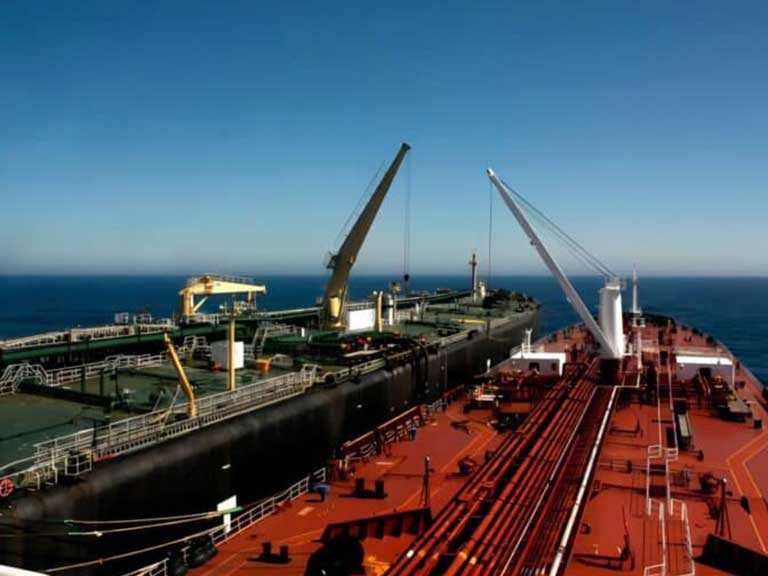
A ship-to-ship (STS) transfer moves cargo from one vessel to another. This happens either at sea or in port. No shore terminal is involved.STS operations handle a wide range of cargo types. These include crude oil, refined petroleum products, liquefied gases, bulk chemicals, and dry bulk commodities.
Three Types of STS Operations
Not all STS transfers are the same. The setup depends on the environment and the vessels involved.
- Underway transfer: Both vessels move at the same speed and heading. One vessel comes alongside the other while both are in motion. This is complex and requires calm sea states.
- At-anchor transfer: One vessel is anchored. The other vessel moors alongside it. This is more stable and more common for liquid bulk cargo.
- Port alongside transfer: Both vessels are moored in port. One is tied to the berth; the other moors against it. This is the simplest setup but requires enough port space and depth.
Each type requires different mooring arrangements, fender configurations, and risk assessments.
Regulatory Framework for Ship-to-Ship Transfers
STS operations are governed by several overlapping international rules. Understanding each one matters.
- MARPOL Annex I (Regulation 41): This is the primary regulation for oil cargo STS transfers. It requires ships to have a shipboard oil pollution emergency plan (SOPEP) and to follow strict procedures to prevent spills. It applies to all oil tankers above 150 gross tonnage.
- ISM Code: The International Safety Management Code applies to all vessels. It requires each company to document STS procedures. These procedures must cover risk assessment, communication protocols, and emergency response.
- IBC Code: The International Bulk Chemical Code governs vessels carrying hazardous liquid chemicals in bulk. For chemical STS operations, this code defines cargo compatibility, tank venting requirements, and personnel protection standards.
- IGC Code: The International Gas Carrier Code applies to LNG and LPG carriers. It sets requirements for cargo containment, pressure relief, and gas detection during transfers.
- OCIMF Ship-to-Ship Transfer Guide: This is the industry’s primary operational reference. The guide covers mooring arrangements, fender deployment, hose connections, and checklists for each cargo type. It is not a legal instrument, but port states and oil majors often require compliance with it.
Essential Equipment for Safe STS Operations
Choosing the right equipment protects both vessels and prevents environmental incidents.
Fender Systems
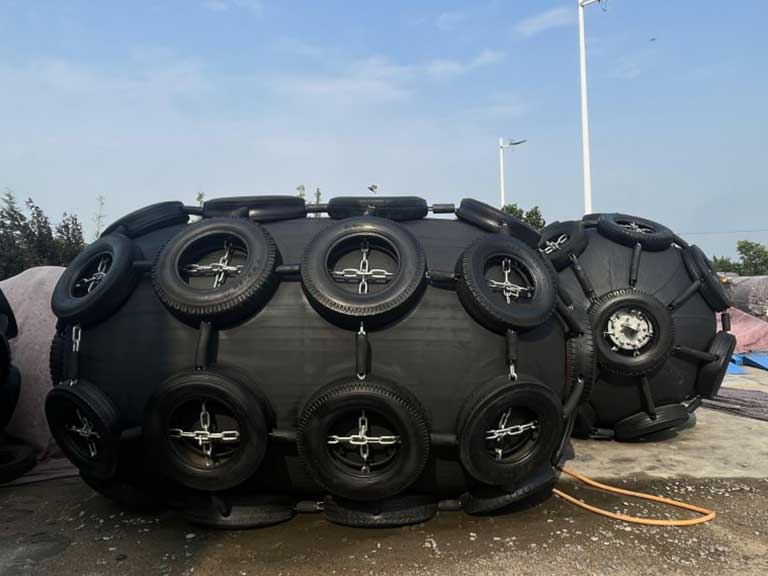
Fenders absorb the energy when two vessels make contact. Choosing the wrong size or type leads to hull damage or fender failure.
The required fender energy absorption depends on vessel displacement and the relative approach velocity. A simple approximation:
Required energy (kNm) = ½ × virtual mass of smaller vessel (tonnes) × approach velocity² (m/s)
For a typical VLCC-to-Aframax STS operation at 0.15 m/s approach speed, the required energy absorption is typically 200–400 kNm. This usually calls for Type II or Type III pneumatic fenders with a diameter of 2.0 m or larger.
The main fender types used in STS operations:
| Fender type | Typical use | Key standard |
|---|---|---|
| Pneumatic Fender | Open sea and at-anchor STS | OCIMF Guidelines for the Purchasing and Testing of Foam Pneumatic Fenders (2009) |
| Foam-filled Fender | Port alongside and sheltered waters | PIANC 2002 Guidelines |
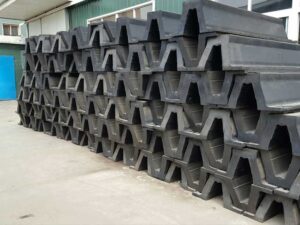
| Rubber Fender | Low-energy contact, slow operations | ISO 17357 |
Pneumatic fenders must be checked before each deployment. The minimum checks are: inflation pressure (typically 0.05–0.08 MPa), external surface condition, chain net integrity, and sling load ratings.
Cargo Transfer Hoses
Hoses must be rated for the specific cargo being transferred. Using an incompatible hose is a common cause of spills.
The GMPHOM (Guidelines for the Purchasing and Testing of Marine Hoses for Offshore Moorings) standard provides specifications for floating hoses. For STS operations, the key parameters are working pressure, design pressure, inner diameter, and cargo compatibility.
Each hose string must be pressure-tested before the operation. The test pressure is typically 1.5 times the working pressure.
Mooring Equipment
Mooring lines keep both vessels in a stable, controlled position. Line tension must be monitored throughout the operation.
Mooring lines should meet the minimum breaking load (MBL) requirements specified in OCIMF’s Mooring Equipment Guidelines (MEG4). The number and arrangement of lines depend on vessel size and the expected current and wind loading.
Use synthetic fiber lines rather than wire for STS operations. Wires are more dangerous when they part.

Key Personnel in Ship-to-Ship Transfer
The safety and success of STS operations depend on the skills of key personnel. They need specialized knowledge and experience for effective coordination and execution.
Person in Overall Advisory Control (POAC)
The POAC oversees STS operations. They ensure the operation is done safely and efficiently. Sometimes, the master of the mothership takes on this role.
STS Superintendent (STSSI) and Support Team
For chemical and gas cargo transfers, the STSSI plays a key role. They need to know how to handle these cargo types safely. The support team includes mooring personnel, hose handlers, and safety observers, all with important roles.
STS service providers must show proof of their superintendents’ qualifications and experience before starting operations. For long operations, having multiple superintendents is important. This ensures 24-hour supervision without safety risks due to fatigue.
Step-by-Step Operational Procedure
Step 1: Pre-Transfer Planning
Before any vessel movement, the POAC and both masters must complete a joint risk assessment. This covers:
- Weather and sea state limits (maximum allowable wind speed, wave height, current)
- Communication plan (VHF channel, language, reporting intervals)
- Emergency shutdown criteria
- Compatibility check for all cargo handling equipment
- Verification of both vessels’ cargo tank gauging systems
The OCIMF STS Transfer Guide provides a pre-transfer checklist in Appendix A. Both masters must sign off on this checklist.
Step 2: Approach and Mooring
The approaching vessel must keep speed below 0.15 m/s at the moment of first contact. Higher approach speeds cause fender overload and potential hull damage.
Fenders must be deployed before the vessels make contact. Position fenders at the main cargo manifold area and at any potential high-contact points along the hull.
Mooring lines are passed and secured in this order: breast lines first, then spring lines. This prevents the vessels from drifting apart or surging fore and aft before all lines are in place.
Step 3: Cargo Transfer
Do not start the cargo transfer until all pre-transfer checklists are complete and signed.
Start pumping at a slow rate. For most liquid bulk transfers, the initial rate is no more than 10% of the agreed maximum rate. Increase the rate gradually while watching for pressure rises, hose strain, or mooring line tension changes.
Monitor these points continuously throughout the transfer:
- Hose connections at both manifolds (look for weeping or strain)
- Mooring line tension (retighten or slacken as the vessels’ drafts change)
- Tank gauging on both vessels (cross-check every 30 minutes)
- Weather conditions against the agreed limits
Maintain radio contact with the other vessel at intervals of no more than 30 minutes.
Step 4: Completion and Disconnection
Stop pumping before the final cargo quantity is reached. This avoids pressure surges in the hose string.
Drain and purge hoses before disconnecting them. For volatile cargoes, use an inert gas purge. Disconnect manifold connections only after blanks are in place on both sides.
Mooring lines are released in reverse order: springs first, then breast lines.
Safety Measures and Risk Management
Safety and managing risks are vital in STS operations. These operations are complex and involve a lot of cargo, making safety a top priority.
Common Risks in STS Operations
STS operations face many dangers, like collisions, mooring failures, spills, fires, injuries, and bad weather. A detailed risk check is needed to spot these dangers and find ways to lessen them. We look at all possible hazards and how to handle them to make sure the transfer is safe.
Contingency Planning and Emergency Procedures
Having a plan for emergencies is crucial in STS operations. This means creating detailed emergency plans for all possible situations. These plans should have clear commands, ways to communicate, and actions to take in emergencies. We also push for practice drills and getting familiar with these plans to make sure they work well under pressure.
- Having plans specific to the location is important to add to the general emergency plans of the ship.
- Knowing the local rules for alerts and who to call for help is key for quick action.
Common Incidents and Prevention Strategies
For safe STS operations, we need to tackle all risks involved. We’ll look at common problems that can happen and how to stop them.
Collision and Contact Incidents
Collisions and contacts during STS operations can happen for many reasons, like mistakes, equipment problems, or bad weather. To avoid these, we focus on careful planning before the transfer, precise movements, and the right fender systems.
Mooring Line Failures
Mooring line failures are a big risk in STS operations. They can hurt crew members and damage equipment. We stress the importance of regular checks and upkeep of mooring lines and following the right mooring steps.
Cargo Spills and Environmental Impact
Cargo spills during STS operations are a big environmental risk. To reduce these risks, we suggest a few steps: choosing the right equipment, testing it, watching it closely, and having good containment plans.
- Spills can happen from hose breaks, leaks, tank overflows, or mooring system failures.
- The harm from spills depends on the cargo type, with different dangers from oils, chemicals, and liquefied gases.
- Where STS operations happen is important for the environment, as it needs extra safety steps in sensitive areas.
By knowing these risks and using prevention strategies, we can lower the chance of incidents during STS operations.
Conclusion: The Future of Ship-to-Ship Transfers
Ship-to-Ship transfer operations are changing with new global trade rules and tech advancements. These changes will make STS operations more important in maritime logistics. They will focus on safe and efficient cargo transfer, like oil and bulk goods.
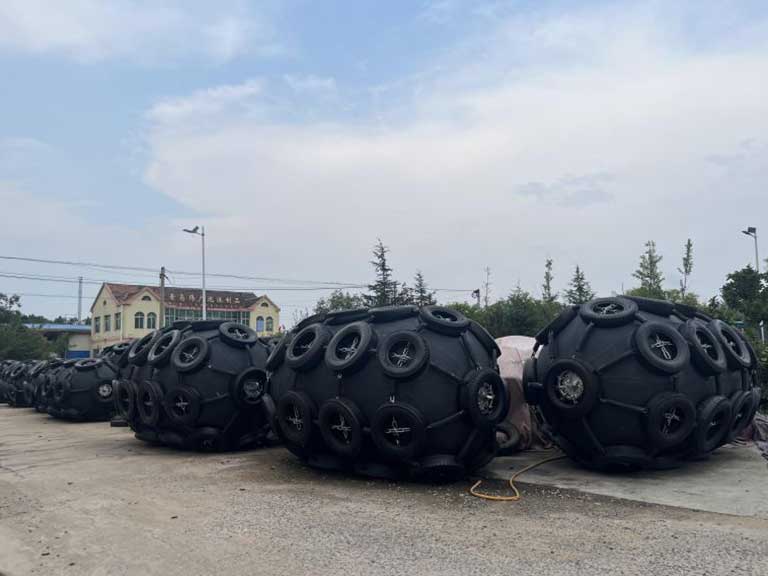
At Henger Shipping Supplies, we’re dedicated to improving STS safety. We do this by making better ISO9001-2008 certified products, like Yokohama fenders. We also follow strict rules to protect the environment and keep people safe.
The industry needs to tackle new challenges, like handling alternative fuels. We must invest in better equipment, training, and procedures. This will keep safety at the highest level.
FAQ
STS operations face risks like collisions, contact incidents, mooring line failures, and cargo spills. These can harm the environment and cost a lot of money.
We follow international rules, like MARPOL, and safe STS operation guidelines. This includes careful planning, risk assessment, and using the right equipment.
We suggest using fender systems, cargo transfer hoses, and mooring equipment that meet standards. This helps avoid damage or accidents during STS transfers.
STS operations can pollute the environment, especially with cargo spills. We plan carefully to minimize this risk.